any pressing questions about web components that you’d like to see answered?
 Zach Leatherman 23 replies 5 likes3 reposts Original on Mastodon
A versioned archive of posts from Bluesky, Mastodon, GitHub, npm, YouTube, Letterboxd, Hacker News, and blogs. Browse the most popular posts.
Last built .
| Since | posts | replies | likes | reposts and quotes | views | |
|---|---|---|---|---|---|---|
| Bluesky | 1,039 | 8,236 | 23,127 | 2,380 | ||
| Mastodon | 2,399 | 29,156 | 55,396 | 16,820 | ||
| GitHub | 179 | 5,777 3,520 | 33,866 | 3,317 | ||
| npm | 139 | 1,546 | 75,991,720 | |||
| YouTube | 30 | 1,203 | 32,713 | |||
| Letterboxd | 55 | |||||
| Blog | 20 | |||||
| Hacker News | 59 | 575 | 802 | |||
| All | 4,807 | 37,967 | 114,394 | 22,517 | 76,024,433 |
any pressing questions about web components that you’d like to see answered?
Zach Leatherman 23 replies 5 likes3 reposts Original on Mastodonworking on a cowboy themed web components talk

full stack developers have taken front-end web development hostage
Zach Leatherman 15 replies 46 likes20 reposts Original on Mastodon@jenn Hello hi yes I am really sorry to cold DM you but I am kinda shopping around and wondering if y’all have anything that might be a good fit? Seems like Fastly has been pretty good to Glitch so far!
@paul Hey Paul, I just wanted to drop you a quick note to say that if you currently had any Zach-sized opportunities open in your sphere that I would love to discuss those with you! Appreciate it!
Taking a break from social media for awhile.
Take care of yourselves ❤️
Zach Leatherman 3 replies 53 likes1 repost Original on MastodonI should write a blog post
Zach Leatherman 4 replies 18 likes Original on Mastodon(disclosure: I am firmly pro-build)
Folks that want to “abolish” build tools are (in my experience) arguing and demanding more from the platform (which I agree with 100%) to go further *without* a build—something that @rich_harris has argued in favor of in the web components discussion. This section of the video felt like a mischaracterization to me.
Zach Leatherman 6 replies 3 likes1 repost Original on MastodonOh wow, linking npm packages with specific GitHub source versions—an exciting update 🏆
https://github.blog/2023-04-19-introducing-npm-package-provenance/
Zach Leatherman 1 reply 16 likes6 reposts Original on Mastodon@rich_harris surprisingly (to me) this slide is the one that made me cringe the most 🫠

I feel like it’d be fun to stream me watching @rich_harris’ latest talk 😎 https://www.youtube.com/watch?v=uXCipjbcQfM
I appreciate Rich’s insight and I think we usually agree ~90%, though that last 10% is where the spice hits 🌶🥵
Zach Leatherman 19 replies 20 likes3 reposts Original on Mastodon“Wreak havoc as an irresistible bloatable possum”
“Join forces with a playful friend and increase the chaos in the local co-op”
“Embrace the chaos by screaming when you get chased or giggling when you get away with it”
“Risk it all for one final crumb of food”
now re-read these as taglines for an open source project
Zach Leatherman 1 reply 6 likes1 repost Original on Mastodondo you ever get the feeling that a game was made specifically for you, personally
(via @thomasorus)
Zach Leatherman 4 replies 18 likes2 reposts Original on Mastodoncheers to the sneaky folks that already found and starred the repo I haven’t shared yet 😅
“React: Too big to fail”
Zach Leatherman 2 replies 14 likes2 reposts Original on MastodonI should write a blog post
Zach Leatherman 10 replies 23 likes1 repost Original on MastodonIf jQuery in the early 2010s had the same paid advocacy that React currently has, we’d likely still be using jQuery for everything.
It’s time for the next era of front end—bring on Svelte, Solid, Marko, Lit, et al.
Zach Leatherman 33 replies 50 likes14 reposts Original on Mastodonyou should write a blog post
Zach Leatherman 37 replies 57 likes34 reposts Original on MastodonMissing my friends at @btconf today but somehow I’m still feeling as though I’m there 🤔🥰
Zach Leatherman 1 reply 11 likes Original on Mastodonsometimes I wonder how much money has been spent on the development of react—I wouldn’t be surprised if facebook has spent something in the ballpark of $20-30 million at this point
is that too high? too low? curious what y’all think
Zach Leatherman 3 replies 9 likes2 reposts Original on Mastodontfw react finally ships support for custom elements
https://mastodon.social/@wonderofscience/110213818915651018

Zach Leatherman 3 replies 22 likes1 repost Original on Mastodonachievement unlocked: assembled ikea furniture with a five year old… helper
Zach Leatherman 9 replies 35 likes Original on MastodonI’m reading this excellent theme switcher blog post from @mxbck
https://mxb.dev/blog/color-theme-switcher/
…and I wondered if there was an open standard or tooling to generate tokens in said format.
I know this community group exists for it! https://www.w3.org/community/design-tokens
Zach Leatherman 1 reply 14 likes4 reposts Original on MastodonWhat tools are y’all using to generate your design token source files?
being on linkedin feels like dumpster-diving in an enterprise roll-off garbage bin
Zach Leatherman 12 replies 28 likes6 reposts Original on MastodonLoving the unique layout of @lmorchard’s personal site: https://lmorchard.com/
Zach Leatherman 1 reply 8 likes2 reposts Original on MastodonOooh the new enhance.dev web site looks great! Congrats @colepeters @brianleroux @kristoferjoseph and team!
Zach Leatherman 5 replies 21 likes3 reposts Original on Mastodon“it doesn’t scale to your current needs but it will definitely scale to your future needs”
Zach Leatherman 13 likes1 repost Original on Mastodon“I would never have our content go anywhere that would risk our credibility.”—NPR CEO John Lansing commenting on NPR shuttering its 52 accounts on Twitter earlier today.
https://www.npr.org/2023/04/12/1169269161/npr-leaves-twitter-government-funded-media-label
Zach Leatherman 9 replies 18 likes5 reposts Original on Mastodonsites vs the app directory
don’t mind me, just shopping around for a web framework




Zach Leatherman 28 replies 108 likes40 reposts Original on Mastodonyay—it merged! https://github.com/mdn/browser-compat-data/pull/19334
Zach Leatherman 2 replies 13 likes4 reposts Original on Mastodonspotted at LEGO Land today ❤️

Zach Leatherman 2 replies 59 likes5 reposts Original on Mastodonobjectively the best corporate or conference swag is crocs
even better if paired with themed socks
no I will not be taking questions at this time
Zach Leatherman 5 replies 16 likes4 reposts Original on MastodonNew blog post:
3 Methods for Scoped Styles in Web Components That Work Everywhere
Zach Leatherman 5 replies 27 likes19 reposts Original on Mastodonokay AM radio is good for the morning but what do I listen to in the PM
Zach Leatherman 7 replies 6 likes3 reposts Original on MastodonHere’s an HTML-only check for Declarative Shadow DOM support that I used in a demo just now:
```
<div>
<p>Declarative Shadow DOM is <strong>⚠️ not supported</strong> in your browser.</p>
<template shadowrootmode="open">
<p>Declarative Shadow DOM <strong>✅ is supported</strong> in your browser.</p>
</template>
</div>
```
Zach Leatherman 29 likes7 reposts Original on Mastodonevery day can be css naked day when you have a css toggle in your footer ok bye
Zach Leatherman 4 replies 18 likes3 reposts Original on Mastodonit’s a good day when you submit a PR to browser-compat-data
“Evergreen” Does Not Mean Immediately Available
Great post by @eric
https://css-tricks.com/evergreen-does-not-mean-immediately-available/
Zach Leatherman 6 replies 16 likes4 reposts Original on Mastodonthe number of web sites should never be finite
The 5-year stability of Eleventy, in which I revert the eleventy-base-blog project from v8 to v1 to see if it will still run on Eleventy v2.0 😰😅
Zach Leatherman 4 replies 19 likes2 reposts Original on Mastodon@Schepp I’m just seeing your “DMs” 😅
if you want to delete those and continue the conversation here that might be best!
Working on a WebC demo to show how to easily swap a web component between different rendering modes:
1. Server rendered plain HTML
2. Declarative Shadow DOM
3. JS-only (boo) Shadow DOM
Stay tuned!
Zach Leatherman 4 replies 33 likes3 reposts Original on Mastodonit’s always jet lag and never jet 120fps
Zach Leatherman 4 replies 18 likes3 reposts Original on Mastodona developer and react—a play in one act
Zach Leatherman 10 likes1 repost Original on Mastodonno one tell the two javascript conferences I’m speaking at next month

Zach Leatherman 15 replies 47 likes2 reposts Original on MastodonJust got my travel sorted for JSNation in Amsterdam on June 1st—see y’all there!
> Why did you choose Preact to build the directives system? Why not React or another JavaScript framework?
> It’s HTML-friendly (unlike React).
—WordPress core commenting on their Interactivity API proposal.
via @developit
Zach Leatherman 2 replies 15 likes7 reposts Original on Mastodoncall me when he’s outdicted
Zach Leatherman 11 likes1 repost1 comment Original on MastodondangerouslyBundleIsomorphicJavaScript
are you trying to tell me that the griddy has nothing to do with css grid
Zach Leatherman 2 replies 6 likes2 reposts Original on MastodonI’m not saying that I don’t trust people that don’t have a personal web site—no, that would be silly, right?
so silly
Zach Leatherman 12 replies 20 likes2 reposts Original on Mastodoneye appointments be like “let’s use these eye drops that make your vision bad to make sure your vision isn’t bad”
Looks like https://www.zachleat.com/web/single-page-applications/ popped off on the orange site, currently holding 113 well reasoned comments—featuring gems like:
💎 “React 16 is about 5 KB uncompressed”
💎 “228 kB of JavaScript? That's a moderately sized image”
💎 “His way to make a website available to any browser is to use an API that nothing but the latest Chrome supports?”
💎 “is SEO important in 2023? how much traffic is coming from Google that converts to paying customers or clients?”
Zach Leatherman 11 replies 41 likes14 reposts Original on Mastodon@bholmesdev ah I tried joining again and you were there but not there? 😭
@bholmesdev not able to make it today?
If your name is @kateholterhoff and you’re conversing with certain Next.js framework authors on a twitter thread (that mentions me), this timeline might interest you:
April 2020: `unstable_runtimeJS` merged to Next
https://github.com/vercel/next.js/pull/11949
Sept 2021: “øJS is coming to Next 🔜”
https://twitter.com/rauchg/status/1437494013137805312
Lest history be revised, “øJS is coming soon” was not referencing the already released `unstable_runtimeJS` feature. So what was it referencing (on a thread about islands architecture)? 🫠
Zach Leatherman 2 replies 3 likes1 repost Original on Mastodon Zach Leatherman 4 replies 4 likes2 reposts Original on MastodonThem: ____ is in early PRIVATE BETA and NOT RECOMMENDED for production use.
Me: I just put up a new alpha on the canary channel and I’m using it in production on 13 sites
Zach Leatherman 2 replies 23 likes1 repost Original on MastodonDefaulting on Single Page Applications (SPA)
Zach Leatherman 5 replies 24 likes21 reposts Original on Mastodonthe faux meritocracy of pencils: why #2 is number 1
Zach Leatherman 2 replies 10 likes3 reposts Original on Mastodonoh no it’s quite a few github domains: https://github.com/orgs/community/discussions/50966
Zach Leatherman 2 replies 2 likes2 reposts Original on Mastodonoops the certificate expired for https://avatars.githubusercontent.com/ 🫠
(github avatar outage)
Zach Leatherman 5 replies 4 likes1 repost Original on Mastodonno I’m not sorry
LL Cool M
Zach Leatherman 7 replies 10 likes1 repost Original on Mastodon7. *react stays in the chat* we hear you, it’s too much javascript. but what if we put SVG in javascript too—would that help?
Zach Leatherman 9 replies 14 likes Original on Mastodon6. *react enters the chat* we hear you, it’s too much javascript. but what if we put our css in there too—would that help?
Zach Leatherman 13 replies 22 likes1 repost Original on Mastodon1. add library javascript
2. add app javascript
3. …oh no, this is too much javascript
4. let’s add more javascript for client-side navigation so that we don’t have to re-run the other javascript
5. …oh no
Zach Leatherman 17 replies 22 likes2 reposts Original on Mastodona little shout out to that “IT IS POSSIBLE THAT SOMEONE IS DOING SOMETHING NASTY!” copy though
a new mantra dropped
Zach Leatherman 3 replies 12 likes1 repost Original on MastodonIf you’re having trouble pushing to GitHub today, perhaps seeing scary new errors on your console like this:
> WARNING: REMOTE HOST IDENTIFICATION HAS CHANGED!
> IT IS POSSIBLE THAT SOMEONE IS DOING SOMETHING NASTY!
Don’t freak out, just read this:
https://github.blog/2023-03-23-we-updated-our-rsa-ssh-host-key/
Zach Leatherman 6 replies 17 likes15 reposts Original on Mastodonseeing folks jokingly use the term “woke” and I think we can file those right next to the “make ___ great again” jokes
we can do better!
Zach Leatherman 4 replies 47 likes9 reposts Original on Mastodonmapquest was the original 90s-style navigation
Zach Leatherman 3 likes Original on MastodonNow that yesterday’s dust has settled—we recognize that create-next-app does in fact default to TypeScript and Tailwind, right?
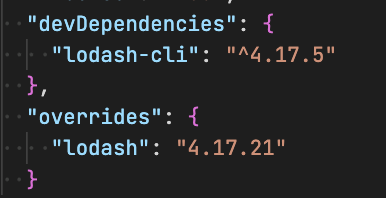
Zach Leatherman 29 replies 1 like2 reposts Original on Mastodonhttps://docs.npmjs.com/cli/v8/configuring-npm/package-json#overrides to override a outdated shrinkwrapped dependency was clutch today.
Trying to use `lodash-cli` with the latest version of `lodash` and this `package.json` addition did the trick:
Zach Leatherman 5 likes Original on Mastodontoday is a good day to get excited about web sites
Zach Leatherman 3 replies 34 likes8 reposts Original on MastodonThe new https://set.studio/ site launched with excellent work from @Amy_Hupe@social.design.systems Leanne @j98 and @andy!
I am really loving those live responsive previews of portfolio sites right on the home page (and the beautiful little resizer too) 😍
Zach Leatherman 11 replies 21 likes4 reposts Original on Mastodonthis subtoot brought to you by the developer currently attempting to convince the world that a pre-selected “Yes” value in a command line prompt is not a default choice.
Zach Leatherman 2 replies 17 likes2 reposts Original on MastodonThe more time I spend in tech the more evidence mounts that misunderstanding consent is the root cause of so many issues.
Zach Leatherman 20 replies 50 likes19 reposts Original on MastodonWhich is faster?
1. Total Blocking Time of one visit to nextjs.org
2. The time it takes to Eleventy to build ×1000 pages added to the Total Blocking Time of one visit to 11ty.dev
Zach Leatherman 1 reply 18 likes Original on Mastodonthe toilet paper industry will sell you a hyper-localized drone delivery solution to ensure that you will never run out of toilet paper during business time when all you really needed was a bidet
in this essay about the JavaScript industrial complex I will…
Zach Leatherman 8 replies 63 likes26 reposts Original on MastodonWhen JavaScript Fails:
“We’re not talking about 3% of users being affected, but 3% of visits. Remember, the problem isn’t that people have turned JavaScript off, it’s that JavaScript isn’t reliable. Meaning it affects all of us, about 3% of the time.”
https://scribe.rip/@jason.godesky/when-javascript-fails-52eef47e90db
by Jason Godesky (https://jason.godesky.net/) via @slightlyoff
Zach Leatherman 5 replies 58 likes42 reposts Original on Mastodon✅ Use the latest version of an ESM dependency: fine.
✅ Use the latest version of a CJS dependency: also fine.
❌ Pinning to a previous CJS major release that worked without issues after they bumped a major release for nothing other than ESM: ew, what? no—gross
Zach Leatherman 7 replies 4 likes1 repost Original on MastodonInteresting that at some point @eleventy was removed from https://vercel.com/templates despite being more popular than some of the frameworks listed there 🤔
Zach Leatherman 9 replies 19 likes6 reposts Original on Mastodonin my personal experience every relationship (that I’m personally a part of) has one person with 13 tabs open in their browser and one with 217 tabs open
Zach Leatherman 23 replies 27 likes2 reposts Original on Mastodonhow dare you all
Don’t vote for which one you’ve been conditioned to use, vote for which one is objectively best:
(choices pruned from https://en.wikipedia.org/wiki/Pajamas)
Zach Leatherman 24 replies 1 like2 reposts Original on MastodonSuspense (sə-spĕns′)
> Anxiety or apprehension resulting from an uncertain, undecided, or mysterious situation.
> The state or quality of being undecided, uncertain, or indecisive.
…in hindsight maybe not the best branding choice.
Zach Leatherman 2 replies 6 likes1 repost Original on MastodonUploaded my slides from the @eleventy meetup talk from this morning: https://www.zachleat.com/web/eleventy-meetup-eleventy-v2/
Watch for the video on the Eleventy Meetup YouTube channel! https://www.youtube.com/@THEEleventyMeetup
Zach Leatherman 20 likes8 reposts Original on MastodonThe @eleventy Meetup is happening now!
Zach Leatherman 6 likes1 repost Original on MastodonFound another one from 2017 for the React criticism timeline https://twitter.com/NetflixUIE/status/923374215041912833
Zach Leatherman 3 likes1 repost Original on MastodonToday I learned: Node’s `vm.createContext` function is quite slow!
https://nodejs.org/api/vm.html#vmcreatecontextcontextobject-options
Some big (dare I say huge) WebC performance wins incoming 🏆
Zach Leatherman 6 replies 12 likes Original on Mastodonnow you wait just one second—are you really attempting to convince me that I can’t do everything and be everything to everyone
rude
Zach Leatherman 11 likes1 repost Original on Mastodonif you add enough JavaScript, it will modulus your site back to fast again—we just haven’t found the threshold yet—stay the course everyone, keep adding more!
Zach Leatherman 17 replies 34 likes8 reposts Original on Mastodon@swithinbank added sparklines to speedlify.dev and they look incredible! 😍
Zach Leatherman 2 replies 3 likes1 repost Original on MastodonIt strikes me that it might be useful to have a comprehensive web performance analysis tool with similar flame graph output that reports a holistic view of the performance of a web site (showing how every asset on the site influences the performance, not just JavaScript execution).
Does this exist?
Zach Leatherman 12 replies 14 likes6 reposts Original on MastodonUsing `0x` to do some flame graph build performance analysis of an Eleventy project, super useful!
https://github.com/davidmarkclements/0x
You can use it on your Eleventy project too:
0x node_modules/@11ty/eleventy/cmd.js --quiet
Zach Leatherman 17 replies 12 likes2 reposts Original on Mastodon