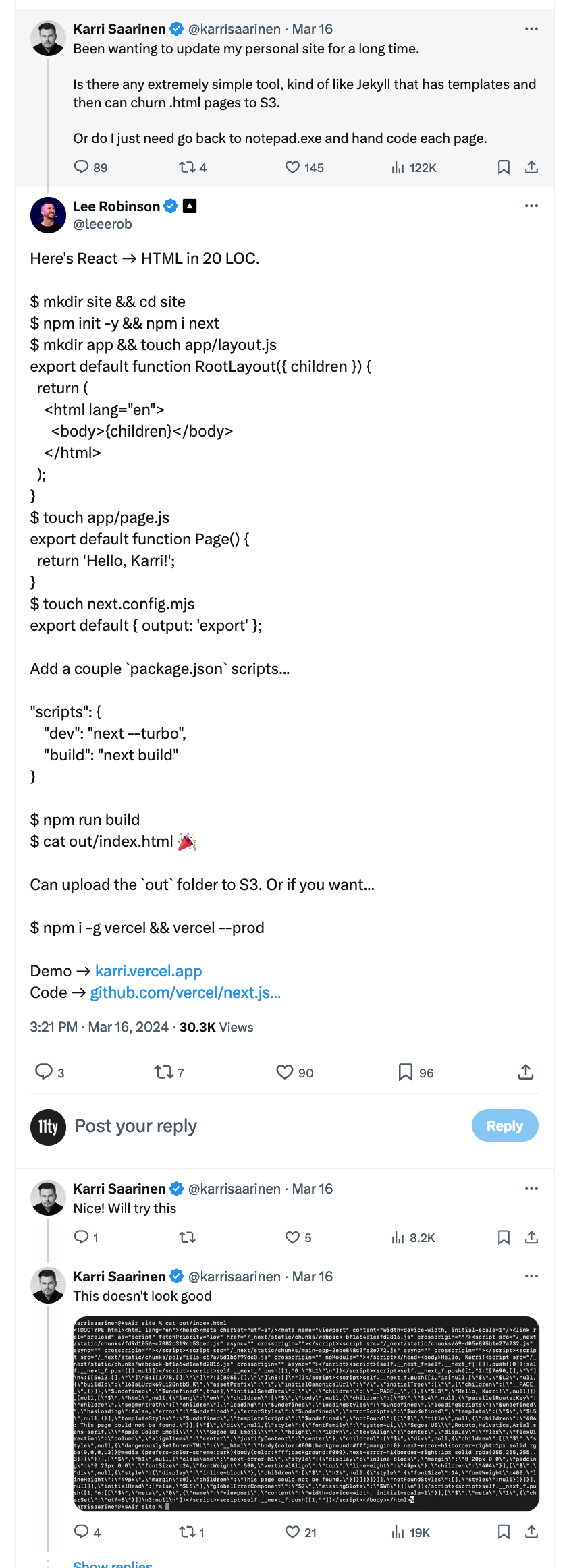
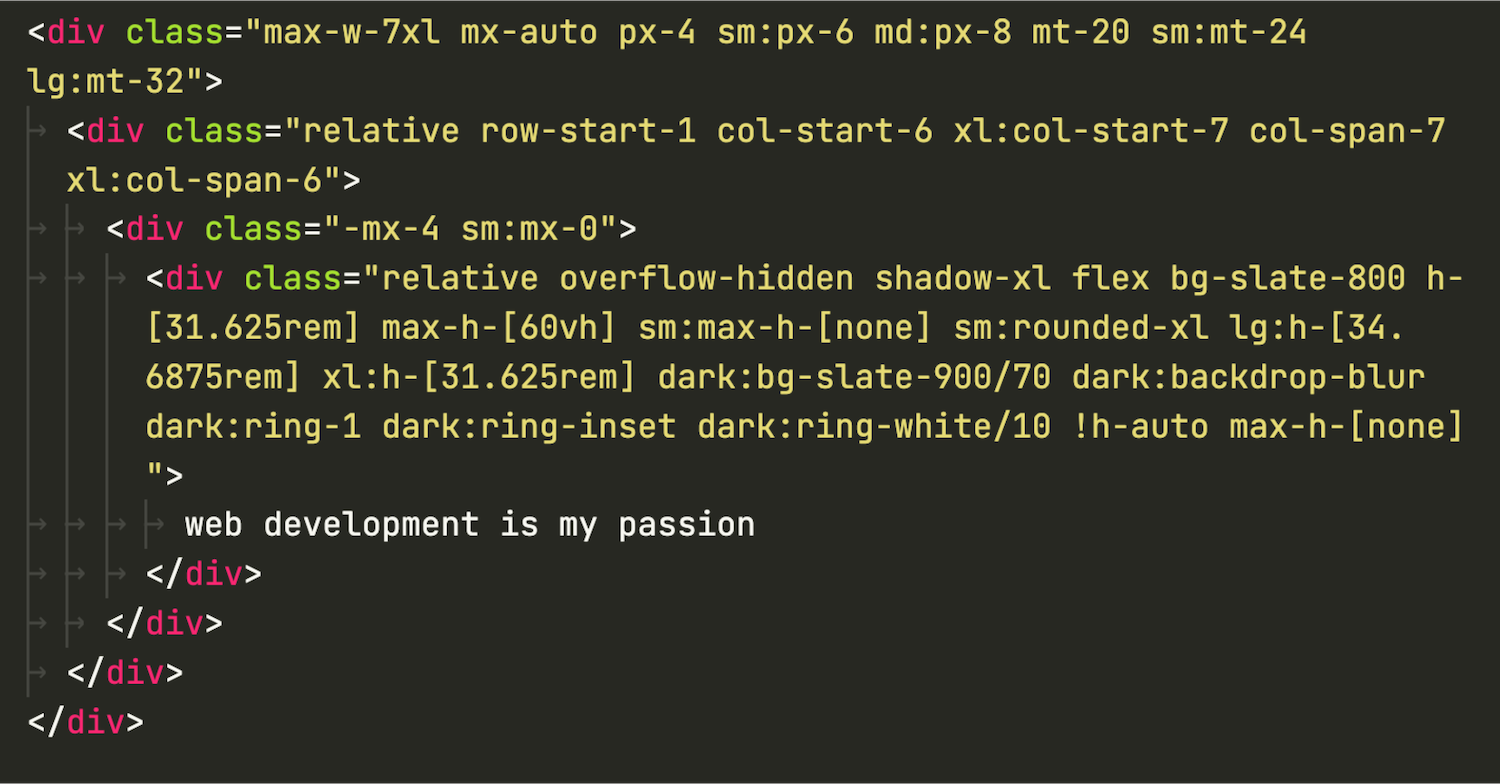
Here’s the source code between the doctype and the <title> for this site:

×26 <link rel="preload">
×36 external <link rel="stylesheet">
×91 external <script src>

This is not a nuanced point I’m making. We’re not debating the finer points of complicated web performance trade-offs. This is a very slow web site.
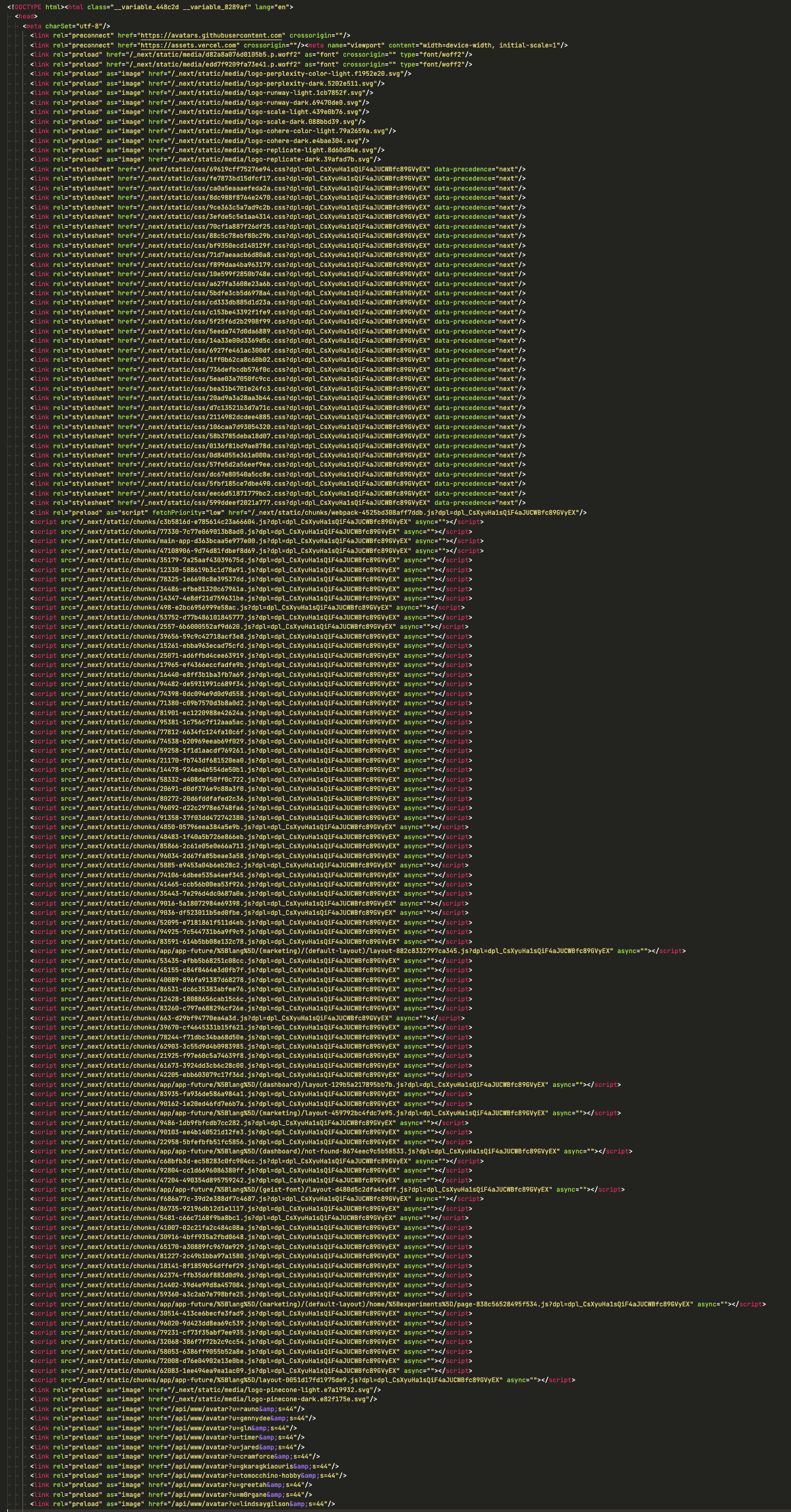

A huge screenshot of HTML with 26 preloads, 36 stylesheets, 91 external scripts

It should be fair to post screenshots like this for companies that tout “the fastest frontends” on their home page—especially notable that this is *not* a temporary regression. It’s been like this for a long time—why is no one talking about it?

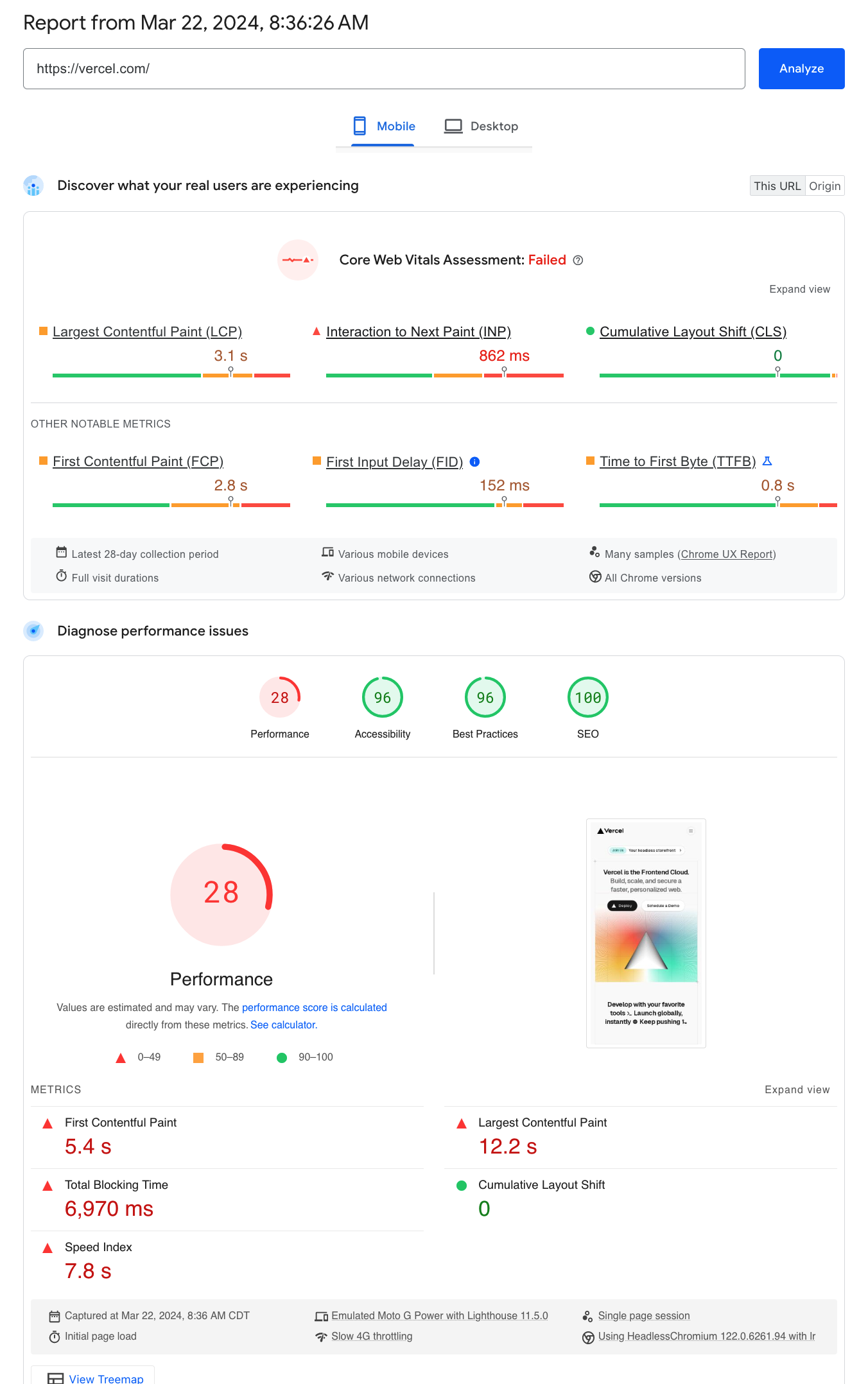
Pagespeed insights for vercel.com, Core Web Vitals: failed LCP 3.1s (average) INP 862ms (slow) CLS 0s (fast) FCP 2.8s (average) FID 152ms (average) TTFB 0.8s (average) Lighthouse: 28 Performance (bad) 96 Accessibility 96 Best Practices 100 SEO FCP 5.4s (slow) LCP 12.2s (slow) TBT 6970ms (slow) CLS 0ms Speed Index 7.8s (slow)

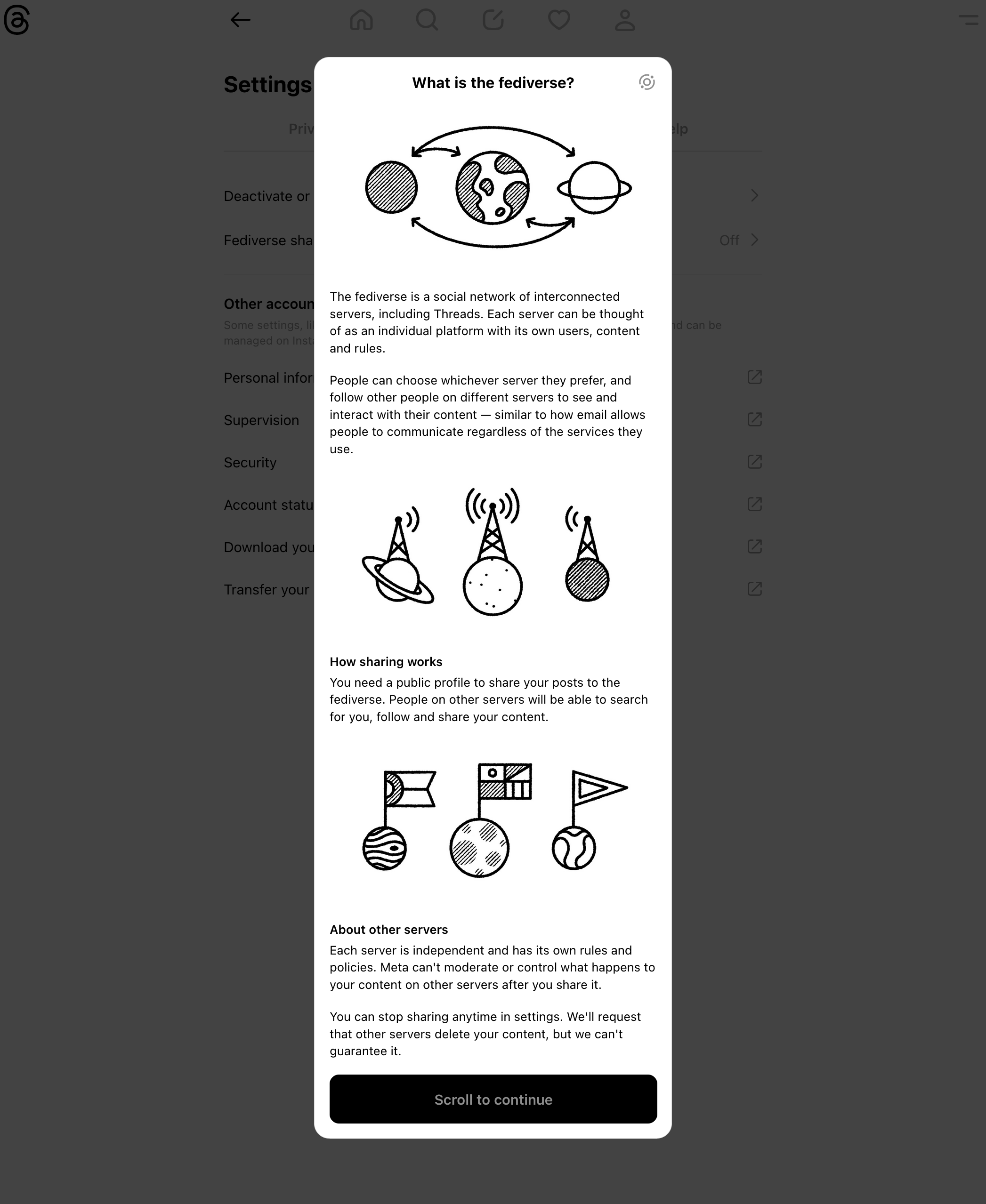
Some interesting (but flawed) UX-design on the Fediverse sharing opt-in modal on threads.net.

If your screen is tall and the modal content has no overflow, you can’t move on. Had to shrink the window and give it a scroll for the button to enable. 😅

What is the fediverse? The fediverse is a social network of interconnected servers, including Threads. Each server can be thought of as an individual platform with its own users, content and rules. People can choose whichever server they prefer, and follow other people on different servers to see and interact with their content — similar to how email allows people to communicate regardless of the services they use. How sharing works You need a public profile to share your posts to the fediverse. People on other servers will be able to search for you, follow and share your content. About other servers Each server is independent and has its own rules and policies. Meta can't moderate or control what happens to your content on other servers after you share it. You can stop sharing anytime in settings. We'll request that other servers delete your content, but we can't guarantee it. Scroll to continue button

Banning TikTok shows the myopic vision of our lawmakers. The US needs comprehensive data privacy legislation that applies to *all social networks* and protects our data—and we needed it 15–20 years ago.

what’s the name for that feeling when a SaaS product has a delayed workflow that takes such an inconsistent and unpredictable amount of time that you suspect the automation is fake and a human is behind the scenes configuring things manually

One human earth week (March 12) until INP becomes a Core Web Vital, with big implications to the JavaScript-heavy React-ecosystem.

Folks hiding bad lab data (Lighthouse scores) behind decent field data (Core Web Vitals) are right to be nervous about this! Remember that Core Web Vitals affect your SEO/rank on Google 👀

https://web.dev/blog/inp-cwv-march-12

A few samples:

1️⃣ nextjs.org: FID 19ms ✅ is now INP 363ms ⚠️
2️⃣ react.dev: FID 18ms ✅ is now INP 408ms ⚠️
3️⃣ vercel.com: FID 135ms ⚠️ is now INP 975ms ⛔

A few streams back @mikeneu and I collab’d on a way to embed a YouTube video transcript right into a blog post for easy static search integration and I finally got a little demo of that going on my personal web site—you can see it in action here: https://www.zachleat.com/web/taylor-swift-fansite/#searchable-transcript

The transcript deep links to the video and the video updates the active caption from the video. (I kinda love it)

Hoping to get a more substantial blog post up on the approach soon!

Genuinely curious: what’s the point in developer advocacy or developer relations work if the parent company requires radio silence during periods of extreme criticism, facing backlash for the company’s direction and decisions?

Shouldn’t this be the moment in which your team are *most* useful?