Mastodon

Reading this blog post from @dries (creator of Drupal) about the post-pivot definition of Jamstack.

https://dri.es/the-new-old-jamstack-and-mach-journey-towards-traditional-cms-concepts

Dries rightly notes that Jamstack 2.0 shares *more* in common with monolithic/traditional stacks.

For me—I read this as a huge indictment of the broadened definition—it’s not a healthy evolution of the term if we must sacrifice technical clarity and simplicity to do so.

#TheFutureOfJamstack

Next.js static export not supporting `next/image` is *wild*.

“Since Next.js supports this static export, it can be deployed and hosted on any web server that can serve HTML/CSS/JS static assets.”

But not images!!

https://nextjs.org/docs/pages/building-your-application/deploying/static-exports#unsupported-features

This is a prime example of customers losing from an unhealthy relationship between framework and hosting provider.

my new analytics product “google analytics analytics” will tell you if stakeholders are using the google analytics data you’re collecting.

you simply add my small script to your site and it will prevent google analytics from collecting data. then we wait to see if anyone complains

I wonder if y’all can help me out—I’m trying to collect a list of web development communities (not related to any one specific tool or framework), can you reply with your favorites?

(if you don’t have a favorite I will also accept communities you’re familiar with 😅)

My takeaway from the #xz backdoor is that I will now treat any and all “is this still being maintained”-esque messages in open source repositories with the hostility merited a nation-state supply-chain attack on open source as a concept.

A large contingent of webdevs seem to think that fast means “best-case fast.”

“Our web sites are fast on expensive hardware and from reliable fiber networks.”

Worst-case fast is a much more meaningful, impressive, and inclusive claim to make! Fast on low-end hardware. Fast on slow networks.

Fast on the World Wide Web—not just from a WeWork in Silicon Valley.

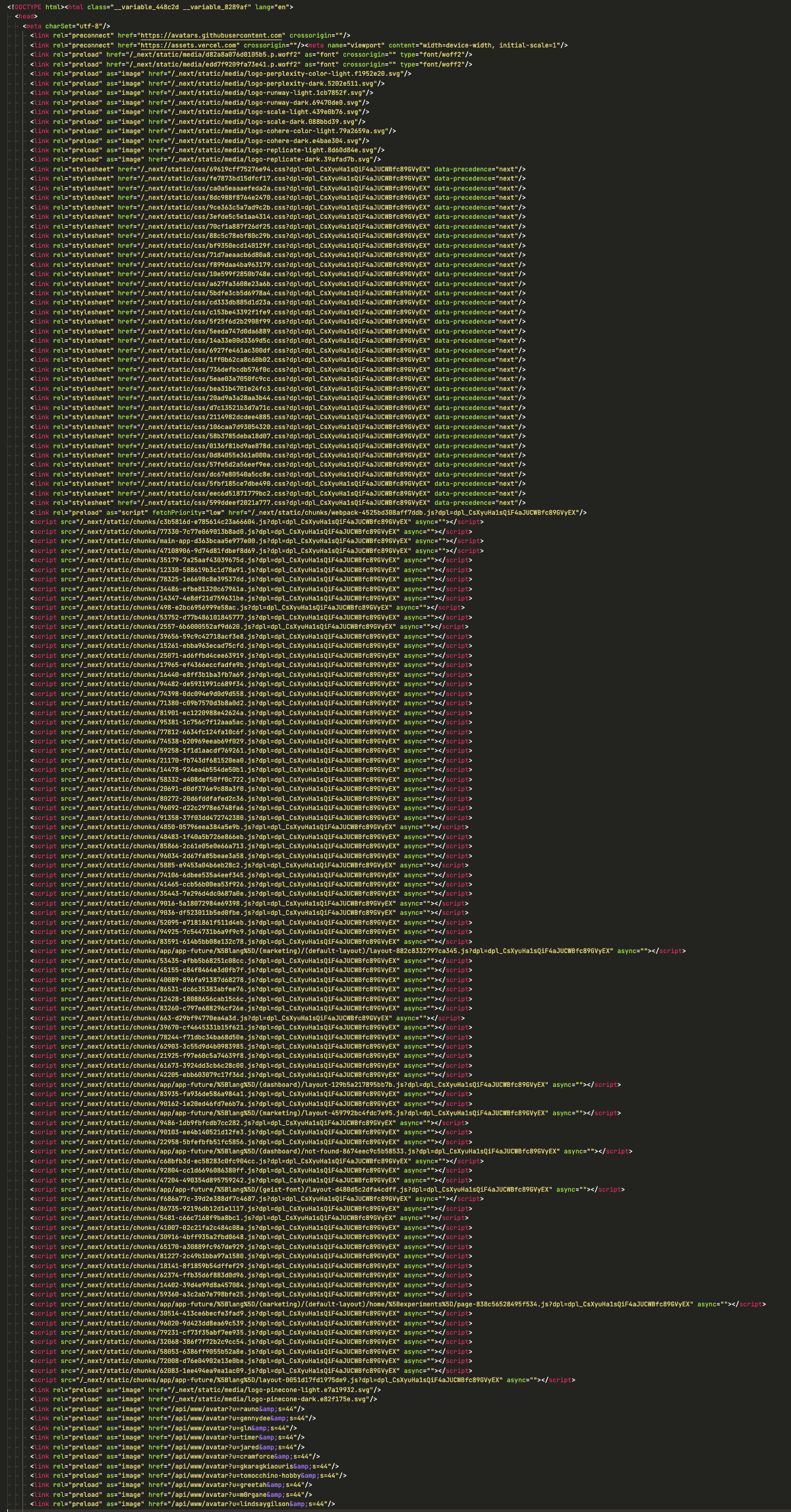
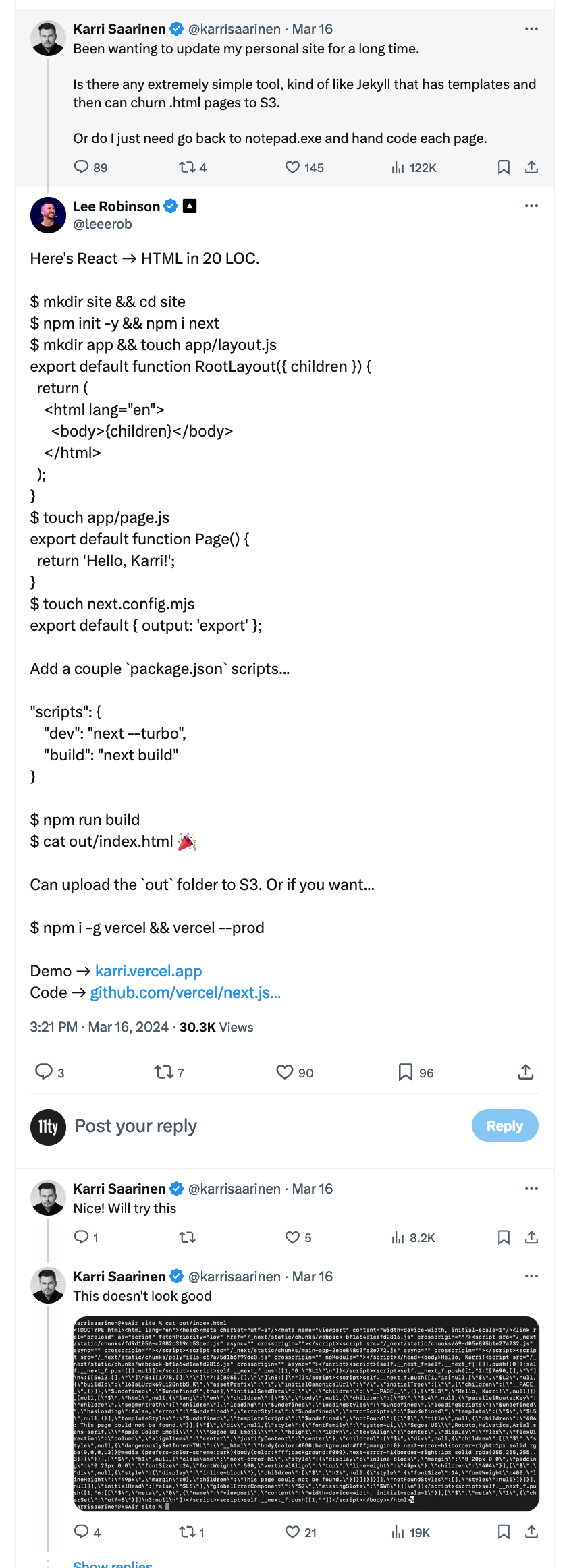
Here’s the source code between the doctype and the <title> for this site:

×26 <link rel="preload">
×36 external <link rel="stylesheet">
×91 external <script src>

This is not a nuanced point I’m making. We’re not debating the finer points of complicated web performance trade-offs. This is a very slow web site.

A huge screenshot of HTML with 26 preloads, 36 stylesheets, 91 external scripts

It should be fair to post screenshots like this for companies that tout “the fastest frontends” on their home page—especially notable that this is *not* a temporary regression. It’s been like this for a long time—why is no one talking about it?

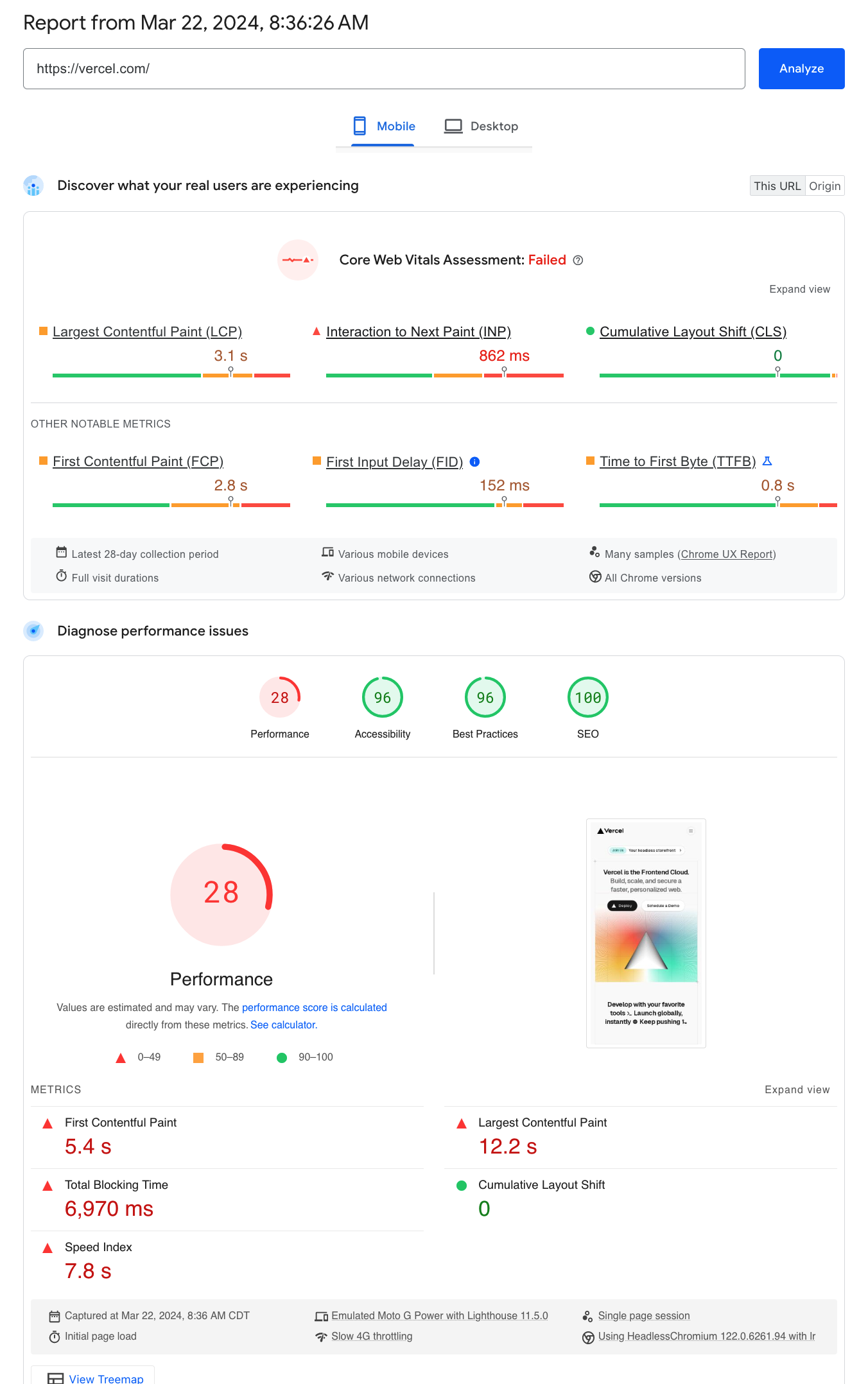
Pagespeed insights for vercel.com, Core Web Vitals: failed LCP 3.1s (average) INP 862ms (slow) CLS 0s (fast) FCP 2.8s (average) FID 152ms (average) TTFB 0.8s (average) Lighthouse: 28 Performance (bad) 96 Accessibility 96 Best Practices 100 SEO FCP 5.4s (slow) LCP 12.2s (slow) TBT 6970ms (slow) CLS 0ms Speed Index 7.8s (slow)

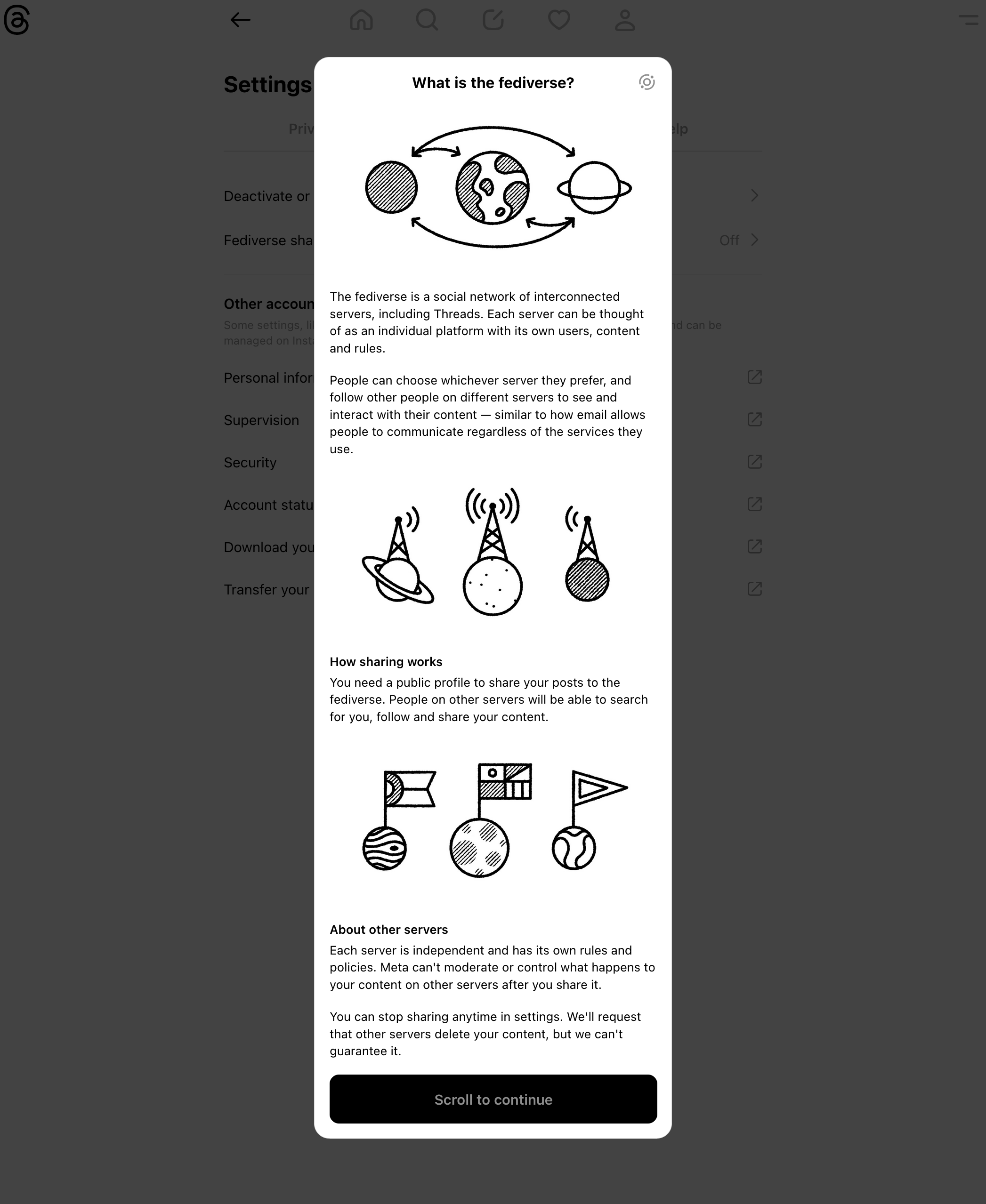
Some interesting (but flawed) UX-design on the Fediverse sharing opt-in modal on threads.net.

If your screen is tall and the modal content has no overflow, you can’t move on. Had to shrink the window and give it a scroll for the button to enable. 😅

What is the fediverse? The fediverse is a social network of interconnected servers, including Threads. Each server can be thought of as an individual platform with its own users, content and rules. People can choose whichever server they prefer, and follow other people on different servers to see and interact with their content — similar to how email allows people to communicate regardless of the services they use. How sharing works You need a public profile to share your posts to the fediverse. People on other servers will be able to search for you, follow and share your content. About other servers Each server is independent and has its own rules and policies. Meta can't moderate or control what happens to your content on other servers after you share it. You can stop sharing anytime in settings. We'll request that other servers delete your content, but we can't guarantee it. Scroll to continue button

Banning TikTok shows the myopic vision of our lawmakers. The US needs comprehensive data privacy legislation that applies to *all social networks* and protects our data—and we needed it 15–20 years ago.

what’s the name for that feeling when a SaaS product has a delayed workflow that takes such an inconsistent and unpredictable amount of time that you suspect the automation is fake and a human is behind the scenes configuring things manually