Is there a tool that helps compare npm downloads for a package to see what percentage of downloads are on various major versions?
 Zach Leatherman 13 replies 9 likes1 repost Original on BlueskyOriginal on Mastodon
A versioned archive of posts from Bluesky, Mastodon, GitHub, npm, YouTube, Letterboxd, Hacker News, and blogs. Browse the most popular posts.
Last built .
| Since | posts | replies | likes | reposts and quotes | views | |
|---|---|---|---|---|---|---|
| Bluesky | 1,039 | 8,236 | 23,127 | 2,380 | ||
| Mastodon | 2,399 | 29,156 | 55,396 | 16,820 | ||
| GitHub | 179 | 5,777 3,520 | 33,866 | 3,317 | ||
| npm | 139 | 1,546 | 75,991,720 | |||
| YouTube | 30 | 1,203 | 32,713 | |||
| Letterboxd | 55 | |||||
| Blog | 20 | |||||
| Hacker News | 59 | 575 | 802 | |||
| All | 4,807 | 37,967 | 114,394 | 22,517 | 76,024,433 |
Is there a tool that helps compare npm downloads for a package to see what percentage of downloads are on various major versions?
Zach Leatherman 13 replies 9 likes1 repost Original on BlueskyOriginal on MastodonIt’s a little frustrating that GitHub Discussions don’t automatically link back when mentioned (like Issues do)
(…or show any activity like when a Discussion title is renamed)
haven’t been in the 200’s on Eleventy Core in *awhile*
no one move, I want to just sit with this for a bit 😅
sometimes I post something that’s earnest which I know is very confusing
In my mind there are three kinds of feedback: criticism, indifference, and praise.
Well-run developer communities accept all three. Poorly-run communities optimize for only the latter.
Zach Leatherman 16 replies 37 likes2 reposts Original on MastodonOriginal on BlueskyClosed 105 active issues (428 to 323) in the past month on @11ty core; slowly organizing Enhancements as GitHub Discussions.
https://www.11ty.dev/blog/github-issues/
Feels like a weight lifting as the Issue Tracker becomes more organized. This is also work I’d *never* do if I felt like I had to grind for growth.
Zach Leatherman 19 replies 55 likes4 reposts Original on MastodonOriginal on Blueskyto err is human, to forgive git history, divine
When folks attempt to use the `eleventy` package instead of the canonical `@11ty/eleventy`, we’ll throw a helpful error now.
Thanks to the donation of the `eleventy` name on npm!
my wife and two kids are still enjoying starcraft and it genuinely feels like I’ve won the lottery 🤑
we won a 2v2 against Very Hard bots yesterday — slowly improving my APM (at 40 right now)
Zach Leatherman 2 replies 21 likes Original on Mastodona bot that posts “is anyone maintaining this” issues on vibe coded repos
Zach Leatherman 12 replies 57 likes4 reposts Original on BlueskyOriginal on MastodonThe Ruby ecosystem is going through some pretty hefty turmoil in an attempt to rescue and restore the integrity of their community.
I’m even seeing some good efforts in PHP-land to better distance itself from the vacuum of stable leadership in WordPress too.
Is there any such movement in JavaScript (the same problems exist)? The biggest pattern I’m seeing is a *huge* centralization in project funding!
Zach Leatherman 10 replies 19 likes4 reposts Original on MastodonThe absolute UX *drama* of the new tinted (vs. clear) Liquid Glass preference in the macOS 26.1 System Settings. Why separate from the Reduce Transparency accessibility toggle? Why so prominent in the Appearance section? Why do users need to know about Liquid Glass at all? Mistakes were made here 😅
Zach Leatherman 27 replies 49 likes3 reposts1 quote Original on BlueskyOriginal on Mastodonthe local spirit halloween has been around longer than the last time they did a full rewrite of the ▓▓▓▓▓▓▓▓▓▓ JavaScript framework
Zach Leatherman 2 replies 21 likes1 repost Original on MastodonOriginal on BlueskyReading along to https://blogs.gnome.org/alatiera/2025/11/06/dhh-and-omarchy-midlife-crisis/ and this quote really resonated:
“Is it any surprise that such a person later would find the most minuscule kind of opposition as an all-out attack on his self-image?”
You can tell a *lot* about a software community by how it handles criticism.
Zach Leatherman 24 likes12 reposts Original on Mastodonthis web component is five years old and it has outlived many epochs of JavaScript frameworks incredible journey-ing their “best practices” into even bester practices
Zach Leatherman 3 replies 32 likes3 reposts Original on MastodonOriginal on Blueskyjust between us, it’s a web component
Zach Leatherman 12 replies 12 likes2 reposts Original on BlueskyOriginal on MastodonShipped some dirt-simple demo styles with <seven-minute-tabs> while making some improvements to the 11ty docs (it’s the tabs component we use over there)
Zach Leatherman 17 replies 23 likes3 reposts1 quote Original on MastodonOriginal on Bluesky8 y/o thought it was the “new york times best spelling author” and you know what, that’s what I’ll be calling it from here on out
Zach Leatherman 6 replies 59 likes2 reposts Original on BlueskyOriginal on MastodonHow we use GitHub Issues and how that’s changing: https://www.11ty.dev/blog/github-issues/
 Build Awesome (11ty) 2 replies 25 likes7 reposts Original on BlueskyOriginal on Mastodon
as “industry” survey season rolls around again it’s important to remember that the results from these things reflect the biases of the most popular dev communities that promote them (and then we get to all pretend like the results are meritocratic)
I now believe it’s better to not participate at all
Zach Leatherman 6 replies 25 likes7 reposts Original on Mastodonmy son and I were matching for halloween this year

Zach Leatherman 3 replies 53 likes Original on MastodonThinking about dark/light mode pickers that have three options: Auto/Dark/Light.
If the default is “Auto” — in what scenario might someone want to move away from Auto (which would visually be a noop to the same theme?)
I’m using Light mode as my system preference, but it seems unlikely that I would swap from Auto (Light mode) to Light mode (not Auto) on a specific site
Zach Leatherman 30 replies 7 likes1 repost Original on Mastodon(Happy Halloween, y’all 🎃)
“AirTag Found Moving With You”
The ominous alert. Fight or flight — adrenaline. After surveilling my surroundings I was frightened to discover that AirTags weren’t the only things moving with me. There were multiple *people* shadowing my movements as well. I was on a bus.
Zach Leatherman 2 replies 52 likes1 repost Original on MastodonOriginal on Blueskymaybe the API could use this web site https://whoisinspace.com/
Zach Leatherman 3 replies 4 likes1 repost Original on Mastodonmy privacy settings are that I’m fine with a geolocation API but it should only return a boolean that reveals whether or not I’m on planet earth
Zach Leatherman 14 replies 20 likes1 repost Original on Mastodonlook, my conscious brain *knows* that the death of google reader and the death of XSLT are unrelated…
…but my subconscious brain has questions

Zach Leatherman 5 replies 23 likes Original on Mastodonthat a completely freeform chat interface might be more usable than your web site isn’t much more than an indictment of your web site
Zach Leatherman 25 likes6 reposts Original on MastodonCopy *and* paste? …in this economy? https://www.zachleat.com/web/copy-paste/
Zach Leatherman 4 replies 19 likes5 reposts Original on BlueskyOriginal on Mastodonhere are two of the cats (allegedly this is all of them)

Zach Leatherman 12 replies 40 likes3 reposts Original on Mastodonthe thing they don’t tell you about having two cats that look very similar is the implausible but persistent suspicion that you may actually have three cats that look very similar
Zach Leatherman 16 replies 41 likes3 reposts Original on MastodonAstute observers may notice that @11ty’s docs *finally* added Copy to Clipboard buttons to all of the code samples!
This is all thanks to the `<wa-copy-button>` Web Component from Web Awesome which (conveniently) just shipped v3 today!
Check out the latest release from the awesome-verse: https://webawesome.com/
Zach Leatherman 5 replies 61 likes7 reposts Original on MastodonOriginal on BlueskyTIL that CSS attr() cannot be used to compute anything in `url()` as the spec considers these to be “attr()-tainted” (for very valid security reasons): https://drafts.csswg.org/css-values-5/#attr-security
Thought maybe there was a way forward for global custom CSS-only favicons via new advancements in attr() https://developer.chrome.com/blog/advanced-attr (but alas, no — which, in hindsight — seems valid and fair)
Zach Leatherman 1 reply 6 likes2 reposts Original on Mastodondo y’all think cloudflare socks would be too on the nose or…
Zach Leatherman 3 likes Original on Mastodonheading to my local spirit halloween to find supplies for my “react footguns” costume
Huh, this piece of the WordPress drama was new to me: https://wordpressenginetracker.com/
How did WordPress get a list of all of the domains hosted with WPEngine? and is this count starting with a static list or is it populating with new WPEngine customers?
HMM
Zach Leatherman 12 replies 2 likes1 repost Original on Mastodonto be clear, the risk of someone phishing my npm credentials is *much* lower than the risk of “can you take a look at this Eleventy project that isn’t working quite right (and also contains malware, intentionally or not)”
Zach Leatherman 14 likes2 reposts Original on MastodonOriginal on Blueskyas a security precaution I am now running all Eleventy projects submitted through support channels via a Virtual Machine (Ubuntu on VirtualBox)
Zach Leatherman 14 replies 28 likes2 reposts Original on MastodonOriginal on Bluesky Zach Leatherman 8 likes2 reposts Original on Mastodontrying to download a 6GB virtual machine image and annoyed that’s it’s taking more than a few minutes
if 56k-me could see me now
Zach Leatherman 29 replies 69 likes2 reposts Original on MastodonOriginal on BlueskyI made a few small changes to the Eleventy Supporters facepile https://www.zachleat.com/web/permanent-eleventy-facepile/
Zach Leatherman 9 replies 16 likes4 reposts Original on MastodonOriginal on Bluesky- depression, irritability, and altered moods or behaviors
- distraction and forgetfulness
- increased blood pressure
are the above symptoms of long-term exposure to (algorithmic-timeline) social media or lead poisoning
source: https://www.cdc.gov/niosh/lead/signs-symptoms/index.html
Zach Leatherman 3 replies 12 likes3 reposts Original on MastodonI’ve automated it so now I don’t have to actively perform the task — I only have to fix it when the automation breaks, which only happens extremely regularly
Zach Leatherman 17 replies 78 likes13 reposts1 quote Original on MastodonOriginal on BlueskyToday’s esoteric HTML element is <kbd>
As in: please press <kbd>⌘</kbd> + <kbd>R</kbd> repeatedly when AWS causes your JavaScript to fail to load.
https://developer.mozilla.org/en-US/docs/Web/HTML/Reference/Elements/kbd
Zach Leatherman 11 replies 86 likes10 reposts4 quotes Original on BlueskyOriginal on Mastodonan AI video of shit being dumped on everything is a little on the nose
Zach Leatherman 6 replies 7 likes1 repost Original on Mastodoncorrection: apparently people care about it
wishing I had run a special fault-tolerance-edition of the 11ty leaderboards today
Zach Leatherman 8 likes Original on MastodonLook, very few people will care about this but I wrote it up anyway https://www.zachleat.com/web/markdown-code-wrapper/
Zach Leatherman 15 replies 49 likes12 reposts Original on BlueskyOriginal on MastodonI believe the louvre thieves stole AWS
Zach Leatherman 2 replies 28 likes5 reposts Original on MastodonI hope the aws gateway currently in time-out is thinking about what it did
Zach Leatherman 12 replies 37 likes4 reposts Original on MastodonOriginal on Blueskyoscar meyer deserves credit for skipping the vendor lock-in of mobile apps and instead prioritizing their wienermobile web site
no — *you* are working on the archives page on your blog on friday night — not me
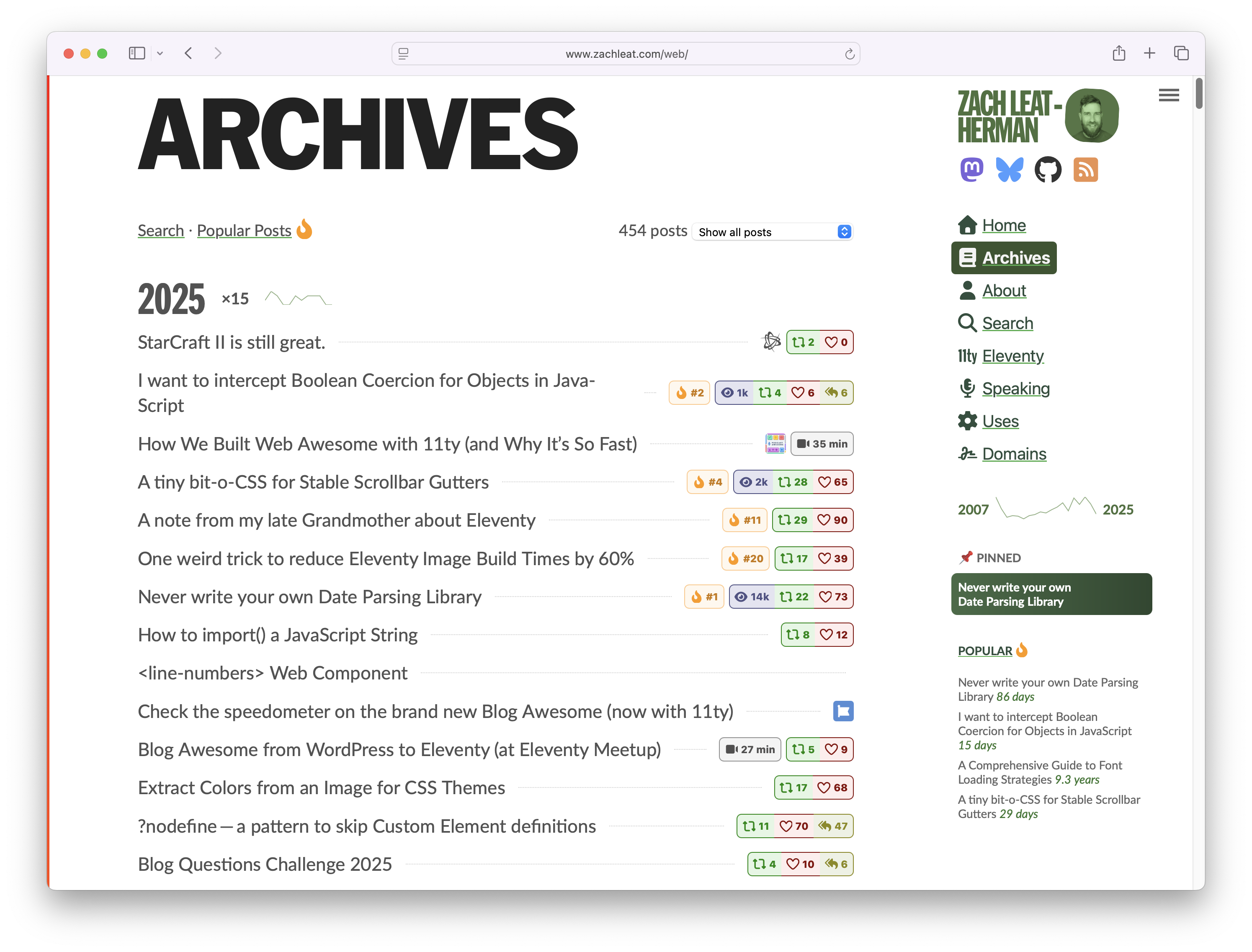
Zach Leatherman 20 replies 30 likes2 reposts Original on Mastodonsure wilhelm screamed but did he laugh — did he cry — did he love
Zach Leatherman 8 replies 33 likes6 reposts Original on MastodonOriginal on BlueskyIf you’re using CSS Nesting, make sure your minifier supports it!
As I learned today, clean-css doesn’t support it yet: https://github.com/clean-css/clean-css/issues/1254
Zach Leatherman 9 replies 26 likes7 reposts Original on MastodonOriginal on BlueskyI want to intercept Boolean coercion for objects in JavaScript: https://www.zachleat.com/web/boolean-coercion/
Zach Leatherman 11 replies 9 likes1 quote Original on BlueskyOriginal on Mastodonis there really no low-level mechanism to intercept boolean primitive coercion in JavaScript?
why can’t I extend `Boolean` to make `new MyBoolean(false)` be `falsy`? (I understand why it isn’t, but I want to make it so)
> Note: Unlike other type conversions like string coercion or number coercion, boolean coercion does not attempt to convert objects to primitives by calling user methods.
when the paywall CSS is accessible but also inaccessible
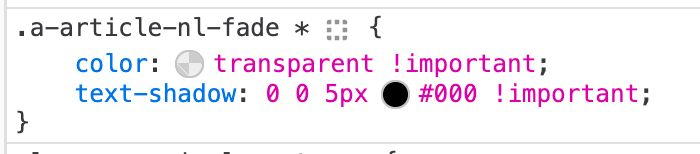
Zach Leatherman 5 replies 17 likes1 repost Original on BlueskyOriginal on MastodonI wonder if yogurt ever asks itself if it’s a good culture fit
Zach Leatherman 35 replies 74 likes5 reposts Original on BlueskyOriginal on Mastodonfolks migrating away from hosting providers that hadn’t previously considered how tightly coupled their web framework was to said host are about to learn some things — I’m sorry and I wish you the best on your journey
Zach Leatherman 7 replies 43 likes7 reposts Original on Mastodonit has never been more clear that the good people of the web must work together
Zach Leatherman 9 replies 89 likes34 reposts Original on MastodonReading the news and watching a real-world instance of “sends in a detachment of inexperienced riot police to the front lines of the protest” (Andor S02E08) play out in real time is *wild*
we just accept link rot as an unavoidable byproduct of the web without a second thought as to why zelda rot isn’t a problem at all
Zach Leatherman 9 replies 60 likes10 reposts Original on MastodonOriginal on Blueskyoh, hello: https://github.com/e18e/action-dependency-diff (@e18e)
Zach Leatherman 5 likes1 repost Original on Mastodonwhat’s the name for the ballmer peak but when you’re tired
4 and a half horsetokens of the apocalypse
Zach Leatherman 4 likes Original on Mastodonwhy weren’t any of my npm packages taken in the rapture
Zach Leatherman 9 replies 36 likes1 repost Original on BlueskyOriginal on Mastodonhas anyone stopped to consider that the rapture is just another supply chain attack
Zach Leatherman 11 replies 46 likes8 reposts Original on MastodonOriginal on BlueskyReally appreciate that GitHub is taking steps to lock down npm publishing workflows: https://github.blog/security/supply-chain-security/our-plan-for-a-more-secure-npm-supply-chain/
Zach Leatherman 9 replies 10 likes4 reposts Original on MastodonWe have power and we should use it: keep voting with your wallet.
https://apnews.com/article/jimmy-kimmel-suspension-supporters-94b79634a19b2c4ce70a2b4195ef1175
Zach Leatherman 2 replies 48 likes19 reposts Original on Mastodonsome good insight here into how (I try) to navigate conflicts on social media (which can be very confusing to folks that are very accustomed to shouting and being shouted at): https://www.youtube.com/watch?v=Omc37TvHN74
Zach Leatherman 3 replies 21 likes9 reposts Original on BlueskyOriginal on MastodonFamily LAN party playing 4-player StarCraft II with a bunch of old computers 😍
Zach Leatherman 7 replies 51 likes1 repost Original on MastodonPlease add this tiny bit-o-CSS for stable scrollbar gutters to your Reset Stylesheets
Zach Leatherman 21 replies 102 likes25 reposts1 quote Original on MastodonOriginal on BlueskyBye bye, Disney+
Zach Leatherman 5 replies 45 likes4 reposts Original on Mastodonthe big logo on the 11ty home page is now a font awesome icon 🥰
Zach Leatherman 7 replies 39 likes3 reposts Original on MastodonOriginal on Blueskyit’s fixed! thanks to the folks that escalated my terrible social media bug report
trying not to read too much into microsoft.com using adobe experience manager
hmm — the favicon for microsoft.com has been broken for at least a week now
Zach Leatherman 4 replies 41 likes5 reposts Original on Mastodon@mwichary Thinking of you today as I heard the Robert Redford news — it’s always a good day to watch Sneakers
Zach Leatherman 6 likes Original on MastodonI could make an entire conference talk solely about Web-Server-On-A-Disposable-Vape and how it’s really a metaphor for the Great Divide
Zach Leatherman 7 replies 18 likes Original on Mastodonsometimes it’s for better and sometimes it’s for worse, but npm has always been a Big Group Project™
✅ an HTML web site hosted on a disposable vape
⛔️ a JavaScript-heavy web site that feels like its loading from a disposable vape
Zach Leatherman 10 replies 124 likes42 reposts Original on Mastodonthe big takeaway here — as noted in the article — is that react is too big to vape
Zach Leatherman 1 reply 45 likes23 reposts Original on MastodonProactive security communication is a sign of a healthy community: https://github.com/rust-lang/crates.io/discussions/11889
via @fasterthanlime
Zach Leatherman 8 likes5 reposts Original on Mastodontrying to estimate how much the saas is gonna cost

Zach Leatherman 1 reply 44 likes8 reposts1 quote Original on MastodonOriginal on Bluesky@ricmac do not look this up but it is still live on his web site. He posted naked pictures of his family (including his underage kids? wtf??) on his web site as a “naked christmas card” — surprised he didn’t get in more trouble for it tbh. For as much conversation that goes into influencers posting stuff of their kids before they know what consent is, it’s wild to look back on this
no-build is the best north star for a build tool
Zach Leatherman 14 replies 43 likes5 reposts Original on BlueskyOriginal on MastodonLovely to see the thought and care that’s gone into shipping the quote posts feature to Mastodon v4.5: https://blog.joinmastodon.org/2025/09/introducing-quote-posts/
via @Mastodon
Zach Leatherman 26 likes3 reposts Original on Mastodonpaul rand memoji
we now go live to a hologram AI recreation of paul rand to hear his reanimated opinion on apple’s new liquid glass design framework
Zach Leatherman 3 replies 1 like1 repost Original on MastodonTIL `hyphens: auto` does not add hyphens for capitalized words (in English at least).
extraordinarily (wraps with hyphen)
Extraordinarily (no wrap no hyphen)
Adding `word-break: break-word` breaks the capitalized word, but still no hyphen 🤨
Demo (applies to Firefox and Chrome, working in Safari): https://codepen.io/zachleat/pen/myeYbJV
I do think the results of the above (even with a small sample) suggest that there is a big expectations mismatch in how security issues are communicated in the JavaScript ecosystem
It’s time to check in on the Anthropic CEO (Dario Amodei), who claimed (6 months ago) that 90% of code will be written by AI in 3–6 months.
https://www.businessinsider.com/anthropic-ceo-ai-90-percent-code-3-to-6-months-2025-3
via https://fediverse.zachleat.com/@zachleat/114180052700529071
Zach Leatherman 8 replies 59 likes28 reposts Original on Mastodonit’s a cold day in XS-hell-T
When an active security vulnerability is in the wild, as an application developer would you rather:
Zach Leatherman 12 replies 3 likes2 reposts Original on Mastodonwhew, it’s been taken down a mere 5 hours after publish.
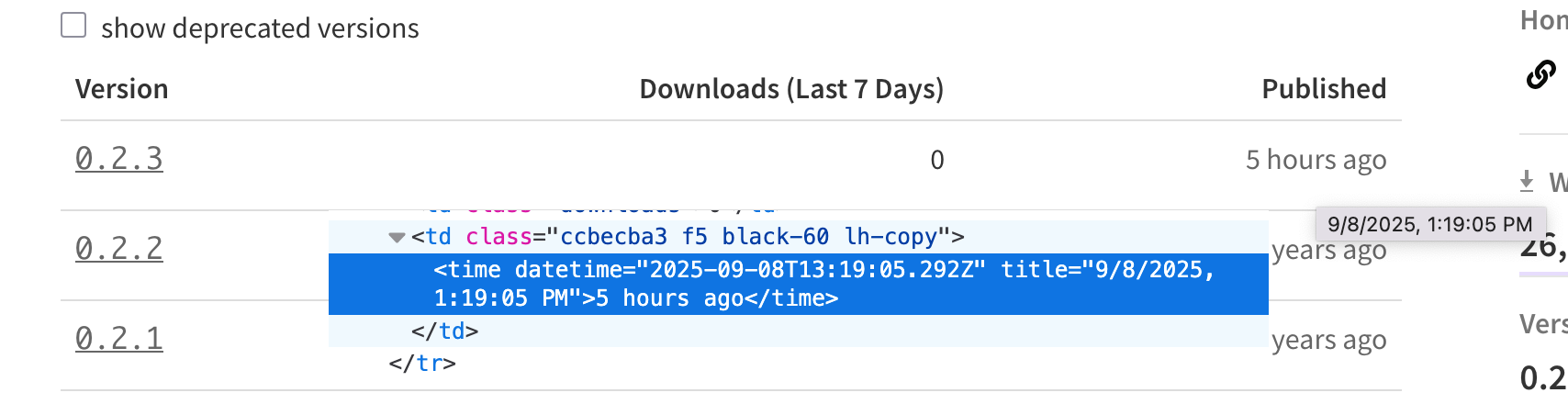
simple-swizzle@0.2.3 is *still* public, active, and in the wild. You can see the malicious code on the code browser: https://www.npmjs.com/package/simple-swizzle/v/0.2.3?activeTab=code
Edit: seeing folks boost this one still but editing to say that it’s been resolved
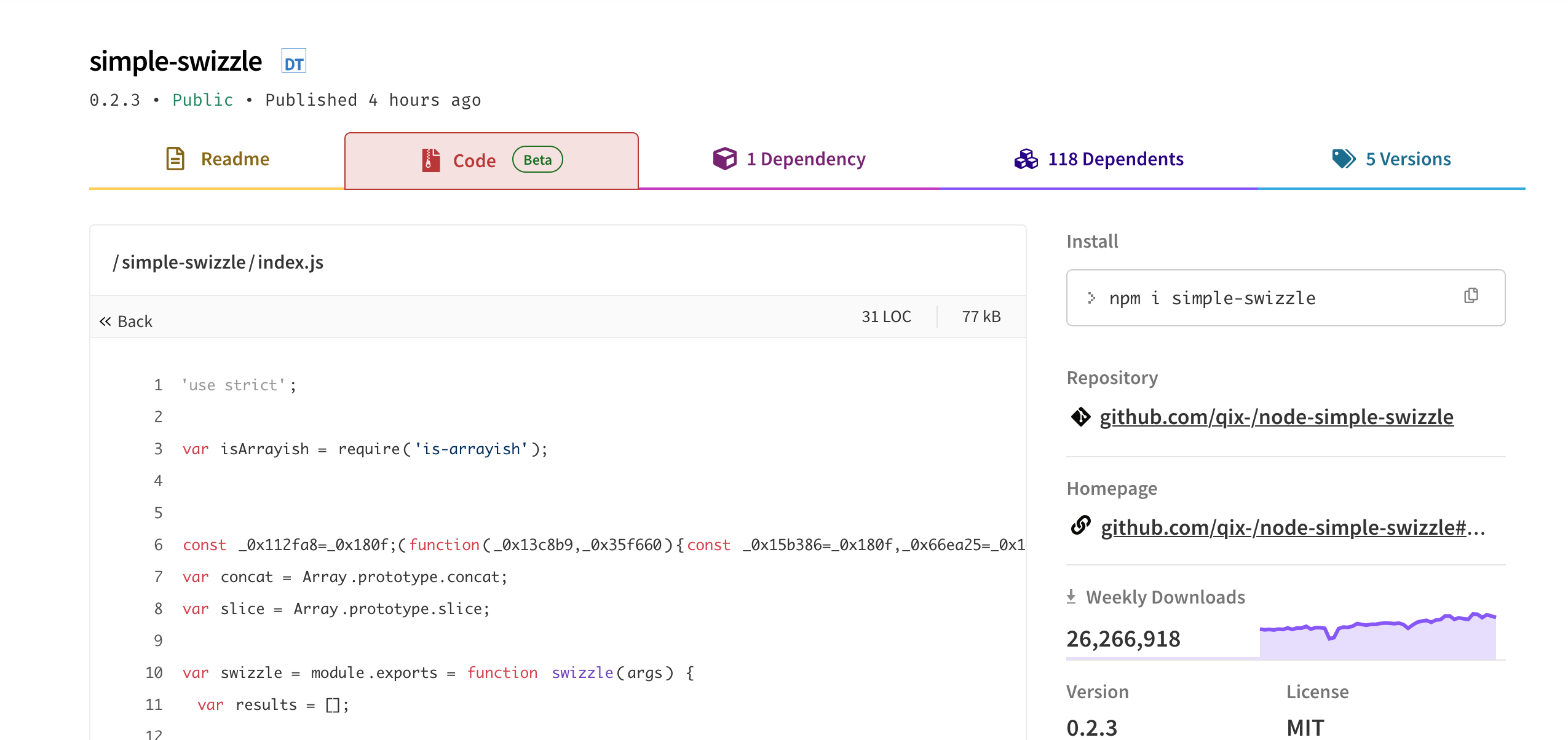
Zach Leatherman 12 replies 16 likes7 reposts Original on MastodonCrashing out at how poorly npm (Microsoft) is handling this security incident. Eleventy is not affected any more but *lots* of other tools in the JavaScript ecosystem are!
Hours later and the compromised package versions are still public…
Maybe don’t install anything from npm today, folks.
Edit: the issue was resolved at approximately 18:30Z
Zach Leatherman 32 replies 75 likes33 reposts1 quote Original on MastodonOriginal on BlueskyI’ve been with https://fontawesome.com/ for a whole year (it went by so fast!) 🙌🏆
Zach Leatherman 10 replies 94 likes2 reposts Original on MastodonOriginal on Bluesky