my son (age 7) just referred to pants as long-sleeve shorts and I am so proud right now
 Zach Leatherman 7 replies 81 likes10 reposts Original on Mastodon
A versioned archive of posts from Bluesky, Mastodon, GitHub, npm, YouTube, Letterboxd, Hacker News, and blogs. Browse the most popular posts.
Last built .
| Since | posts | replies | likes | reposts and quotes | views | |
|---|---|---|---|---|---|---|
| Bluesky | 1,039 | 8,236 | 23,127 | 2,380 | ||
| Mastodon | 2,399 | 29,156 | 55,396 | 16,820 | ||
| GitHub | 179 | 5,777 3,520 | 33,866 | 3,317 | ||
| npm | 139 | 1,546 | 75,991,720 | |||
| YouTube | 30 | 1,203 | 32,713 | |||
| Letterboxd | 55 | |||||
| Blog | 20 | |||||
| Hacker News | 59 | 575 | 802 | |||
| All | 4,807 | 37,967 | 114,394 | 22,517 | 76,024,433 |
my son (age 7) just referred to pants as long-sleeve shorts and I am so proud right now
Zach Leatherman 7 replies 81 likes10 reposts Original on MastodonWorth noting that Netlify’s On-demand Builders provide global persistence across all edge nodes: https://www.netlify.com/blog/2021/10/25/faster-more-reliable-page-loads-with-update-to-on-demand-builders/
Alternatively, CloudFront has 13 Regional Edge Caches that (in my tests with a VPN) seem to be segmented too: https://aws.amazon.com/cloudfront/features/?whats-new-cloudfront.sort-by=item.additionalFields.postDateTime&whats-new-cloudfront.sort-order=desc
CloudFront also offers an Origin Shield product that appears to provide a similar feature but I have not enabled it: https://docs.aws.amazon.com/AmazonCloudFront/latest/DeveloperGuide/cache-hit-ratio.html#cache-hit-ratio-use-origin-shield
A few things here: Vercel’s Edge Network cache is segmented into 18 regions. Further, the cache eviction policy is “best-effort” and assets may be evicted before they’re stale: https://vercel.com/docs/edge-network/caching#limits
I suspect I was getting very few cache hits—not ideal at all for a screenshots service (or any resource intensive serverless function?). I wanted those images to request once and cache for as long as possible.
Preliminary comparisons with Netlify, Vercel, and AWS Lambda+Cloudfront suggest that Vercel is *drastically* overcounting serverless invocation amounts. I suppose it’s possible that I misconfigured something but Netlify was like 4h/day, Vercel was 42h/day and this new AWS setup is looking like it’s going to weigh in at 2h/day?
Alarm bells are going off over here.
Zach Leatherman 26 replies 15 likes2 reposts Original on Mastodonlook—did I yolo this to production in the same day that I learned how to do it? yes, yes I did
vercel rewrite -> cloudfront -> api gateway -> aws lambda function is running the 11ty screenshots API now 👀
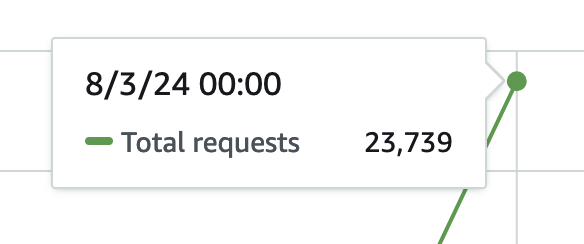
Today I learned how to deploy my own serverless function with a heavy caching layer using AWS Lambda (with a Layer for large dependency reuse), API Gateway, and CloudFront.
I am an enterprise developer now.
Zach Leatherman 51 replies 45 likes1 repost Original on Mastodonquote posts/toots are like toilet water—they’re great for flushing quick thoughts but terrible when the splashback hits you
Zach Leatherman 11 likes2 reposts Original on Mastodonin the immortal words of steffi graf: have you heard of our sustainability fundraising initiative https://www.11ty.dev/blog/sustainability-fundraising/
Zach Leatherman 6 replies 5 likes4 reposts Original on Mastodonfirst marriage proposal because of @eleventy so you could say things are getting *pretty* serious: https://indieweb.social/@bobmonsour/112893676626086346
Zach Leatherman 7 replies 35 likes2 reposts Original on Mastodonin order to use that file from your bucket in your lambda as a layer it needs to be in the same aws region, sure.
the one thing we know for sure is that servers are not allowed to communicate outside of their municipality
Zach Leatherman 6 replies 8 likes1 repost Original on Mastodonin order to upload a file to amazon you need to create an s3 bucket, sure.
the one thing we know for sure is that uploads over 10MB will tax the amazon upload process beyond scalable comprehension
current status: learning how to deploy a serverless function directly to aws lambda to save money 😅
Helper plugin when upgrading your Eleventy project to a new major version.
Low level utility to perform build-time image transformations.
“no one wants to be a third wheel” is a anti-tricycle propaganda
Zach Leatherman 21 replies 18 likes5 reposts Original on MastodonA simpler static site generator.
A little command line utility to create files in a cross-platform way.
A little command line utility to create files in a cross-platform way.
A little command line utility to create files in a cross-platform way.
A little command line utility to create files in a cross-platform way.
A little command line utility to create files in a cross-platform way.
@jenn Eleventy 3.0 is imminent and is Node 18! I’m curious how much this will cause y’all issues at Glitch—y’all are still on Node 16 max, right?. I’ve done a little work to see if we could at least support 16+ on core and it seems like it wouldn’t be too big of a deal: https://github.com/11ty/eleventy/pull/3378
I’m just curious as to your take on it—should I bother with this or no?
A simpler static site generator.
@rem did you already lock down that web components talk for ffconf? I might be interested but don’t want to step on any toes if someone is already in the pipeline
A minimal, modern, generic, hot-reloading local web server to help web developers.
my dog would *never*
I always lock my computer when I get up from my desk because of the greatest operational security threat facing my workspace: cats walking or sitting on the keyboard
Zach Leatherman 9 replies 48 likes9 reposts Original on MastodonLow level utility to perform build-time image transformations.
Just an update here: I can verify that it’s safe to restore Node 22.x to your test suites on GitHub Actions
Zach Leatherman 3 likes2 reposts Original on MastodonMaking careful note of the incentives of a hosting company investing in AI as they also simultaneously charge for bandwidth and traffic: https://front-end.social/@stefan/112863640599785389
Zach Leatherman 2 replies 26 likes12 reposts Original on MastodonIf we can agree that browser fingerprinting is bad, we should be able to agree that third-party cookies are also bad.
There is consensus amongst browser-makers that fingerprinting is a bad thing, right?
…right?
Zach Leatherman 28 replies 32 likes5 reposts Original on Mastodonmake it work
make it right the same
make it fast slower
Zach Leatherman 6 replies 11 likes Original on MastodonRefactoring working JavaScript code to satisfy limitations in TypeScript.
Everything is fine.
I am being productive.
This is productivity.
Zach Leatherman 26 replies 36 likes11 reposts Original on Mastodon@janl is CouchDB gonna weigh in on the JD Vance thing? 🫣
Zach Leatherman 9 replies 22 likes Original on MastodonOH “dung beetles are professional turd burglars”
Low level utility to perform build-time image transformations.
I’m not sure how typescript got crowdstrike’d into my list of things to do today
TypeScript TIL: `compilerOptions.noResolve: true` will also make all of your explicitly listed `compilerOptions.types` disappear.
So even with `"types": ["node"]` you’ll still get errors that complain about clearly installed types.
> Cannot find name 'process'. Do you need to install type definitions for node? Try `npm i --save-dev @types/node` and then add 'node' to the types field in your tsconfig.
Everything is fine.
Some good points about venture capital backed open source from @Colman here: https://mastodon.ie/@Colman/112840985325704306
I’d also add that small scale closed source and venture capital backed open source aren’t the only two options.
Zach Leatherman 3 replies 12 likes4 reposts Original on Mastodon📮 A new blog post about how I used the Conditional Exports feature in Node.js to improve the error messaging when someone tries to require("@11ty/eleventy") in Eleventy 3.0 (written in ESM)
Zach Leatherman 15 likes6 reposts Original on MastodonOriginal on BlueskyThe `pug` template language plugin for Eleventy v3 and newer.
Helper plugin when upgrading your Eleventy project to a new major version.
Listening to Jesse Welles. https://tidal.com/browse/artist/15803343 Payola, Cancer, The Olympics, War Isn’t Murder, and Whistle Boeing are all great tracks.
Zach Leatherman 4 replies 2 likes1 repost Original on Mastodonthing becomes popular because it’s free to use ♻️ popular thing goes away because it’s now too expensive to run
Zach Leatherman 4 replies 14 likes2 reposts Original on Mastodoneverybody has a plan until they {get punched in the mouth, scale beyond the host’s free tier}
Zach Leatherman 6 replies 29 likes3 reposts Original on MastodonI spent too much time here trying to use “bootloaderlicker” and gave up—someone else can use it 😅
last week proved that even without a union the computers can still crowdstrike
Zach Leatherman 5 replies 19 likes3 reposts Original on MastodonWould be nice to have an option in GitHub Issues notification settings to know when a maintainer comments. It would allow subscribing but skip drive-by comments from everyone else.

Zach Leatherman 8 replies 58 likes11 reposts Original on MastodonJust stumbled across a 1.2 MB SVG favicon in the wild 😅
Zach Leatherman 25 replies 32 likes1 repost Original on MastodonOf these hosts—what are y’all using, primarily? (If other, please reply!)
Zach Leatherman 45 replies 4 likes10 reposts Original on MastodonWow, just learned that Google Photos is actively generating `goo.gl` share URLs.
Edit: it’s possible this URL will be unaffected, as the original blog post notes the retirement of `https://goo.gl` links. However, I do have Google Photos shared albums currently using `https://goo.gl` links, so 😬🤷

Zach Leatherman 3 replies 13 likes2 reposts Original on MastodonGenuinely upset at the retirement of Google’s URL shortener, goo.gl.
https://developers.googleblog.com/en/google-url-shortener-links-will-no-longer-be-available/
Just to be clear, this will break a large portion of the web for what seems to be a marginal cost savings. So many Google decisions—including the recent sale of Google Domains—have us asking why? Who’s making the decisions over there?
Zach Leatherman 16 replies 52 likes31 reposts Original on Mastodonis anyone interested in trying my new C-00000291*.sys plugin for eleventy
Zach Leatherman 10 replies 50 likes10 reposts Original on MastodonIf your GitHub Actions are failing right now (specifically on Node 22), here are the GitHub issues you may be interested in subscribing to:
https://github.com/npm/cli/issues/7672
https://github.com/actions/setup-node/issues/1112
https://github.com/actions/node-versions/pull/182
Zach Leatherman 9 replies 8 likes4 reposts Original on Mastodonwhy can’t chatgpt just fix it
Zach Leatherman 10 replies 54 likes29 reposts Original on MastodonLow level utility to perform build-time image transformations.
here’s a good idea that I think should exist:
a job board for non-react front end jobs
Zach Leatherman 24 replies 164 likes41 reposts Original on MastodonI have immediately hit my quota for reading feedback today please come back tomorrow
Zach Leatherman 21 likes1 repost Original on Mastodonjust read some feedback that the 11ty docs need “more foreplay” and my dear friend let me tell you about the miracle of touching grass
Low level utility to perform build-time image transformations.
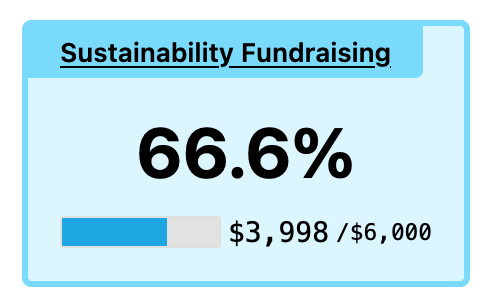
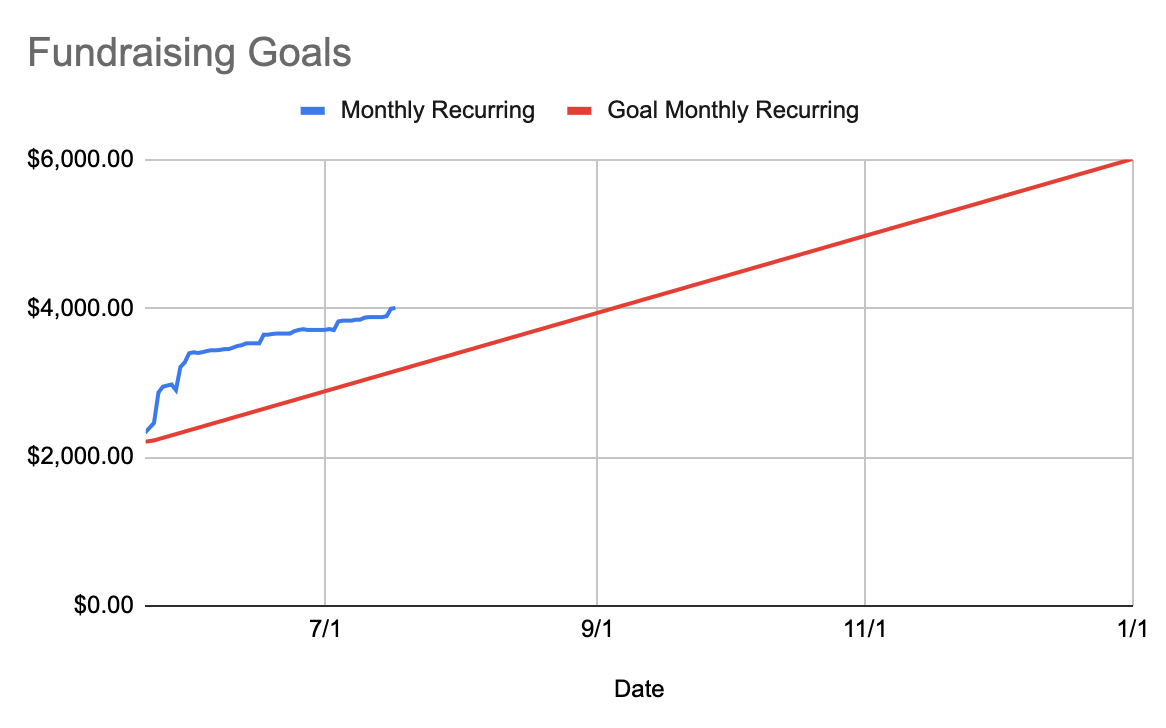
Very important news: @eleventy’s sustainability fundraising goal currently at 66.6%
https://www.11ty.dev/blog/sustainability-fundraising/
Thank you everyone! We still need your help but we’re on track to make 11ty sustainable in 2024!
Zach Leatherman 3 replies 35 likes18 reposts Original on MastodonThere are incredible parallels between the failure modes of smart home technology and modern web site architecture:
When the power goes out 🤝 When JavaScript fails
My smart lock failed and I’m locked out of my house 🤝 This form button doesn’t submit
The company went out of business and now this {smart device 🤝 JavaScript framework} isn’t receiving updates and poses a security risk
Zach Leatherman 35 replies 127 likes66 reposts Original on MastodonSafari 17.x has made improvements to their private browsing mode, notably enabling a default content blocker, removing known tracking query params from link URLs, and encrypted DNS.
Read more: https://webkit.org/blog/15697/private-browsing-2-0/
via @wilander
Zach Leatherman 16 likes3 reposts Original on MastodonA simpler static site generator.
@beep side note I wonder if you might give me access to your repo to debug that v2->v3 build performance issue? My hunch is that it’s because of the extra overhead of the inputpath plugin (the plugin right, not the filter?)
@5t3ph hey stephanie! I see you’re speaking at web unleashed! I have kind of a weird question—are you covering your own expenses for that? They asked me to speak and want me to cover my own flight 😬
“There’s always money in the banana stand JavaScript server runtimes”
Zach Leatherman 3 replies 20 likes Original on MastodonLow level utility to perform build-time image transformations.
Generate an Atom, RSS, or JSON feed with Eleventy.
this photo seems poetically accurate
(via https://www.sfchronicle.com/realestate/article/elon-musk-x-sublease-s-f-headquarters-19568418.php and @keith)

Zach Leatherman 1 reply 10 likes Original on MastodonWhat’s the latest writing/research/best-practices on bundling versus code splitting? Large requests versus splitting into smaller ones?
Hoping for something a bit more nuanced than “reducing download size is good” or “reducing network count is good.”
Zach Leatherman 24 replies 10 likes2 reposts Original on Mastodoncasually wearing my golden girls shirt and some lady just asked me to name one of their songs??
Zach Leatherman 12 replies 14 likes2 reposts Original on MastodonA fork of `recursive-copy`: Simple, flexible file copy utility
2012, 2020, 2024 😅 https://www.zachleat.com/twitter/1339584224165199873/
me when they recommend to reduce the amount of JavaScript: 🎉🏆🥰🌈
me when they recommend to use fewer Web Fonts: 😡😠😢😭
Zach Leatherman 27 replies 49 likes4 reposts Original on MastodonIt was a issue tracker triage day: 47 closed issues on https://github.com/11ty/eleventy/issues 🏃🏃♂️🏃♀️
Total went from 423 -> 376! Feels really good to clean a bit of house.
Zach Leatherman 1 reply 31 likes1 repost Original on MastodonThe `haml` template language plugin for Eleventy v3 and newer.
The `mustache` template language plugin for Eleventy v3 and newer.
Incremental Font Transfer has the potential to change *everything* (for the better) about how we load web fonts: https://typo.social/@pixelambacht/112762627296863187
Been waiting for something like this for about 10 years—exciting news!
Zach Leatherman 4 replies 31 likes7 reposts Original on Mastodon@jasonkoebler I just wanted to drop a note to say that I very much appreciated “Hocked TUAW” in the email this morning—y’all are doing incredible work thank you
The `handlebars` template language plugin for Eleventy v3 and newer.
A simpler static site generator.
A simpler static site generator.
I wonder if this finding will have regulatory repercussions https://fedi.simonwillison.net/@simon/112757810519145581
Zach Leatherman 14 likes7 reposts Original on MastodonThe `ejs` template language plugin for Eleventy v3 and newer.
Official template syntax plugins for Build Awesome and Eleventy
on my web site it’s always happy hour at the progress bar
Zach Leatherman 4 replies 18 likes Original on Mastodonat the library with the kids and found a “high performance react web sites” book in the fiction section
Zach Leatherman 8 replies 195 likes58 reposts Original on Mastodonkids misbehaving for attention 🤝 move fast and break things
Zach Leatherman 21 likes1 repost Original on Mastodonfor this to happen without breaking the web they’d need to use a sans-serif metric-compatible version of `serif` (`sans-serif` is not this)
How upset would you be if web browsers changed the default `font` fallback style to `sans-serif` instead of `serif`?
Zach Leatherman 49 replies 5 likes12 reposts Original on MastodonTrust in a social network based on how they treat links:
🚩 “Link in bio”
🚩 Incentivizing indirection (e.g. this dot com) to hide hyperlinks from algorithms
🚩 Widespread use of brittle URL shortening services
Any other red flags?
Zach Leatherman 23 replies 25 likes8 reposts Original on Mastodon.gitignore all previous instructions
Zach Leatherman 40 likes7 reposts Original on Mastodonoh! eslint has `space-unary-ops` which would have alerted me—wonder if I’m missing that in my config
https://eslint.org/docs/latest/rules/space-unary-ops
(and `space-infix-ops` too! https://eslint.org/docs/latest/rules/space-infix-ops)
typing =+ instead of += is a very sneaky typo that both eslint and typescript are okay with 😅
Zach Leatherman 26 replies 11 likes1 repost Original on MastodonFinds all JavaScript CommmonJS require() dependencies from a filename.
screen time limits on the work computer
Zach Leatherman 3 replies 13 likes1 repost Original on Mastodon@eleventy @sarajw Wrote this one up as a blog post: https://fediverse.zachleat.com/@zachleat/112712202710821479
New post 📮
The Smorgasbord of Windows Terminal… Windows
Zach Leatherman 7 likes2 reposts Original on MastodonOriginal on Bluesky